History
07/23/20260 new articles
The story now emphasizes that the administration is not just extending coal-plant lifetimes but also backing mines, new coal projects, and rolling back emissions constraints. It also adds a stronger emphasis on legal conflict and the broader industry context that coal remains in structural decline despite federal support.
07/22/20262 new articles
The story has shifted from a broad policy reversal toward a more concrete account of how federal emergency and defense authorities are being used to keep specific coal plants running, restart facilities, and finance new coal-related projects. It also adds clearer evidence of costs, delays, and legal challenges tied to those interventions.
- Nearly $700 million in Defense Production Act support was announced.
- Ratepayers were charged $135 million to keep one Michigan plant open.
- Coal support now includes restart efforts and a proposed export terminal.
- Colorado’s delayed retirements are causing missed clean-electricity plans.
- State-led lawsuits over emergency authority remain unresolved.
06/18/20263 new articles
The story has broadened from emergency-backed coal retention to a fuller pro-coal policy push that now includes major federal funding and more explicit regulatory rollback. The latest version also sharpens the conflict by adding state, utility, and court disputes over whether these measures are lawful and limited to real emergencies.
06/08/20263 new articles
The story has shifted from broad federal support for coal retention to a clearer, more aggressive program that now includes restarting plants, funding upgrades, and backing new coal capacity. The framing also broadens slightly, with reliability and severe-weather risks added to the justification and legal challenges becoming more prominent.
- Coal support now includes restarting plants and backing new coal capacity.
- EPA rule changes are easing pollution controls and delaying cleanup requirements.
- Severe-weather risk is now cited as a reason for coal retention.
- Legal scholars are now among the critics of the strategy.
06/05/20263 new articles
The story has broadened from emergency coal-plant extensions into a wider federal push to preserve coal generation through funding, export support, and regulatory delays. It also now more explicitly ties the rationale to rising demand from data centers and AI, while the legal and health backlash remains active.
- Federal support now includes direct funding and coal export support.
- Proposed delays to pollution and cleanup rules are now part of the policy package.
- Reliability arguments now explicitly cite data centers and AI demand.
- Doug Burgum and Chris Wright are newly central actors in the story.
- Coal ash cleanup deadlines are being relaxed to preserve baseload coal operation.
05/22/20261 new articles
The story has become more specific and concrete: federal coal-retention actions are now framed as emergency orders under Section 202(c), with clearer examples of which plants and utilities are being forced to stay open. The legal and regulatory conflict is also sharper, as the policy is explicitly tied to emergency authority and ongoing court challenges.
05/11/2026Topic Formed
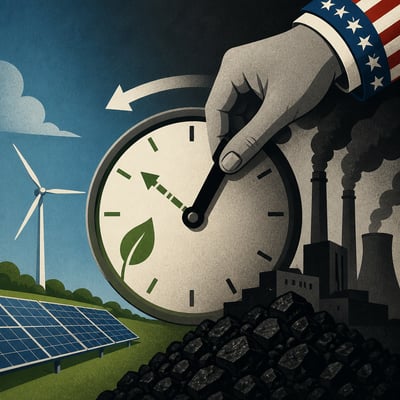
Federal energy and environmental policy is being used to keep U.S. coal plants operating longer than planned, despite higher costs, pollution concerns, and legal challenges from several states. The main pressure point is the conflict between grid-reliability claims and the clean-energy retirement path that was already underway.

 Climate
 Privacy
 Bob Dylan
 Drones
 Data Centers
 AI Governance
 2026 Maine Senate Race