
 Climate
 Privacy
 Bob Dylan
 Drones
 Data Centers
 AI Governance
 2026 Maine Senate Race
Last Update: 08/01/2026 at 2:00 PM EST
U.S. Spring Extremes And Climate Signals
Coverage from U.S. News & World Report, US News & World Report, and others
Articles
5
Active Days
129
The Topic
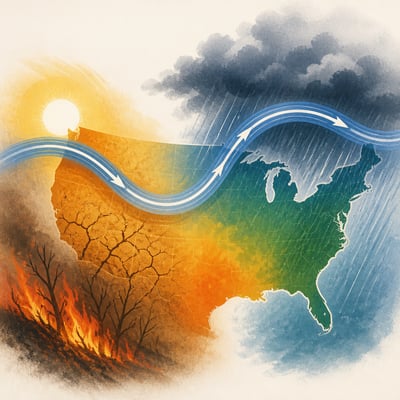
Recent reporting describes a single spring weather pattern producing very different extremes across the United States, with jet stream shifts, warm Pacific waters, drought, heat, rain, and fire risk all appearing together. Climate change is treated as a modest amplifier rather than the sole driver.
First Article: 03/16/26
Latest Article: 07/22/26
Summary
- A single mid-March pattern is producing multiple weather extremes across the United States at once, including blizzards, strong winds, heat, heavy rain, and drought.
- Jet stream variability remains the main atmospheric mechanism used to explain the spread of regional extremes.
- Warm Pacific waters are repeatedly cited as an amplifier, especially for Hawaii rainfall and broader spring volatility.
- Drought still covers a large share of the country, and western fire risk is rising as heat and dryness persist.
- Climate change is framed as an enhancing factor, but the reports also preserve a strong role for natural weather variability.
- The topic is coherent and current, with little historical material and a dense concentration of near-term weather impacts.
History
This topic is new, but as new articles are added to it this area will summarize shifts, changes and expansions of the issues.
Featured
03-16-2026
Meteorologists report a mid March surge of diverse extreme weather across the United States linked to human caused climate change.
03-16-2026
Spring, Climate Change, Jet Stream Serves Up Buffet Of Wild Weather Hitting US
Meteorologists report mid March US extreme weather across multiple regions linked to jet stream shifts and climate change.
07-22-2026
A Colorado School of Mines-led attribution study in PNAS finds climate change increases low-snow winter drought likelihood across the U.S. West and projects much higher future risk.
Timeline: 129 Days
Hover over any logo to see coverage summary, click for full article.
Additional Articles
⭐⭐⭐⭐⭐
Scientists linked March U.S. record western heat and eastern storms to jet-stream and planetary-wave patterns, with rapid attribution finding human-caused warming increased heat risk.
⭐⭐⭐
Meteorologists report a mid March clash of air masses across the United States producing broad extreme weather with climate change influencing jet stream and heat patterns.