
 Climate
 Privacy
 Bob Dylan
 Drones
 Data Centers
 AI Governance
 2026 Maine Senate Race
DOE Backs Coal Plants With Carbon Capture
Coverage from Energy.gov, E&E News by POLITICO, and others
Articles
9
Active Days
619
The Topic
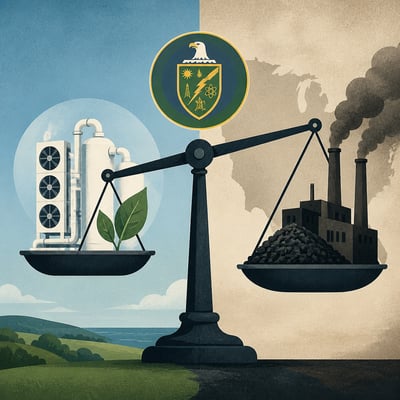
The U.S. Department of Energy is backing studies to restore, modernize, or develop coal-fired power plants paired with carbon capture, while emphasizing carbon dioxide utilization in manufacturing and oil production. Four selected projects span Puerto Rico, Maryland, Alaska, and West Virginia and include feasibility, design, or recommissioning work rather than confirmed commercial construction. The direction links grid reliability and expanded coal use with carbon-management technologies, but project maturity, capture performance, financing, and long-term operation remain uncertain.
First Article: 01/01/00
Latest Article: 06/12/26
Summary
- DOE selected four coal-related projects in Puerto Rico, Maryland, Alaska, and West Virginia for recommissioning, modernization, or feasibility and design work.
- The selected concepts represent up to 3,565 megawatts of coal capacity, including a proposed 1,600-megawatt TerraSpark facility in West Virginia.
- Carbon capture is included across the selected projects, but several awards are limited to feasibility, front-end engineering, or design rather than construction or operating capture systems.
- DOE officials are emphasizing uses for captured CO2 in manufactured products and oil-field injection alongside permanent geologic storage.
- The policy direction combines coal-power reliability goals with carbon-management funding, creating tension over whether federal support will deliver meaningful emissions reductions.
- TerraSpark's West Virginia proposal remains early stage, with no confirmed site or electricity customers identified in the supplied reporting.
- Broader DOE programs support capture, transport, utilization, storage, and carbon dioxide removal, but large-scale infrastructure and deployment gaps remain.
History
The update mainly sharpens the story around DOE's June 2026 selections, adding a clearer financing and project-stage picture rather than introducing a new direction. It also newly identifies the DOE Loan Programs Office and a West Virginia proposal as still lacking a confirmed site and electricity customers.
The story is largely unchanged, but the framing has shifted slightly toward the uncertainty around whether federal coal support will translate into real capture or storage. The current version also broadens the description of project stages and emphasizes DOE's carbon-dioxide utilization agenda more explicitly.
Featured
Timeline: 619 Days
Hover over any logo to see coverage summary, click for full article.