
 AI Governance
 Data Centers
 Drones
 Climate
 Privacy
 2026 Maine Senate
 Bob Dylan
Community Benefit Bargains
The ongoing major issues seen in articles and topics over time.
The Drivers
19
Articles Related
876
The Big Picture

Data center projects increasingly depend on negotiated economic packages that promise jobs, tax revenue, utility payments, school funding, workforce programs, and community benefits in exchange for local acceptance. The enduring issue is whether the economic benefits justify public incentives, infrastructure burdens, and long-term community impacts.
Data centers offer large capital investment but relatively modest permanent employment compared with construction scale and public resource demands. The structure of abatements, tax-increment financing, host payments, community benefit agreements, and utility funds will shape political support and regional competition.
Categories
Project Finance & Incentives, Community & Local Opposition, Permitting & Regulation, Infrastructure & Site Development
Keywords
abatement repeal, benefit enforcement, benefit monitoring, certification framework, community benefit plan, community benefits agreement, community energy fund, community impact fee, construction jobs, construction wage standard, economic development, economic impact study, energy consumption tax, enforceable community benefits, host community payments, incentive eligibility, incentive moratorium, incentive pause, liquidated damages, no local tax abatement, permanent jobs, property tax revenue, property-tax relief, public subsidies, sales-tax exemption, school funding, subsidy backlash, subsidy repeal, tax abatement, tax exemption pause, tax exemption repeal, tax exemption review, tax incentives, tax-break review, TIF district, wage requirement, workforce training
The Drivers
The Topics below, and their articles, all focus on, exemplify, or help to explain this theme.
Primary
- 95
Data Centers Need Early Community Engagement To Win Approval

Data center development is spreading into rural and smaller communities, where projects offer substantial tax revenue and infrastructure investment but also raise concerns about water, power, noise, traffic, and transparency. The material consistently points to early engagement, specific public commitments, and negotiated benefits as important factors in securing approval and sustaining local support. Communities that rely mainly on tax abatements or developers that delay outreach may capture less public value or face opposition, permit delays, or canceled projects.
Articles: 5
Last Updated: 08/17/2026
- 93
Ohio Data Center Regulation Conflict
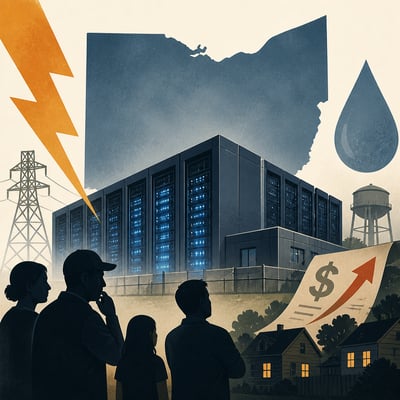
Ohio's rapid hyperscale data center buildout is driving a broad regulatory response involving electricity cost allocation, grid planning, water and wastewater permits, tax incentives, zoning, ballot measures, and demands for greater local control.
Articles: 86
Last Updated: 09/14/2026
- 92
Data Center Incentives Face A Reckoning
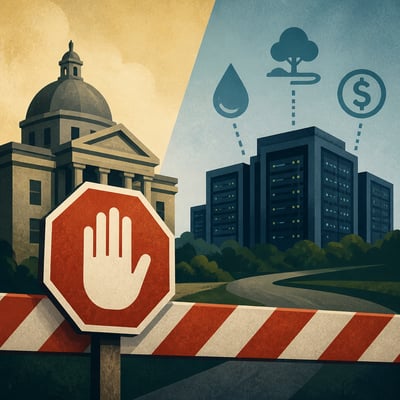
States and municipalities are tightening scrutiny of large data centers as incentive costs, electricity demand, water use, land impacts, and community concerns become more visible. Ohio paused new tax-exemption requests after reported costs reached nearly $1.6 billion in 2025 and launched a legislative review, while Massachusetts established statewide review requirements for projects above 25 megawatts. The developments could slow approvals, increase project costs, and shift more responsibility for infrastructure and community impacts to developers.
Articles: 126
Last Updated: 09/17/2026
- 92
Pennsylvania Data Center Rules Tighten
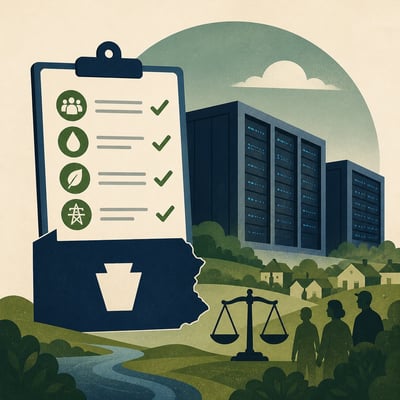
Pennsylvania is replacing fast-track data center approvals with local-first permitting and binding requirements for power costs, water use, transparency, and community benefits. The policy responds to a large proposed project pipeline and rising concerns about grid reliability, infrastructure costs, and speculative demand.
Articles: 166
Last Updated: 09/15/2026
- 90
Data Centers Draw Local Resistance
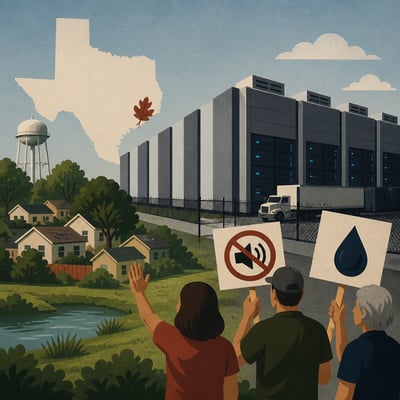
Large data center campuses are moving forward in Red Oak, Texas, while a 2,080-acre proposal in Mason County, Kentucky, advances through rezoning review. Residents and local groups are challenging projects over land use, transparency, traffic, noise, water, pollution, and potential grid effects, even as officials and developers cite investment, infrastructure, tax revenue, jobs, donations, and workforce training. The developments show how approval timelines increasingly depend on local safeguards, public participation, and the credibility of promised benefits.
Articles: 9
Last Updated: 09/04/2026
- 90
Data Center Growth Meets Local Constraints
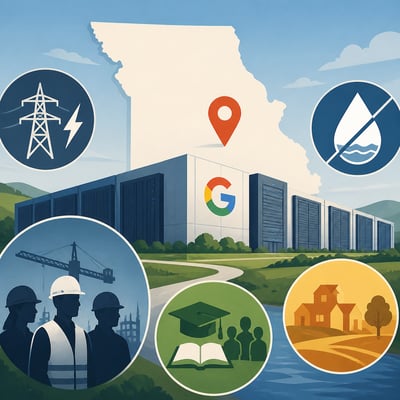
Amazon and Google are proposing or advancing multibillion-dollar data center projects in Missouri, including adjacent campuses in Montgomery County, while Amazon is pursuing a large facility in North Carolina. The projects promise construction, operating jobs, and local contributions, but they also raise questions about tax abatements, electricity and grid infrastructure, water use, temporary generator emissions, and whether communities will bear associated costs. Missouri projects emphasize direct payment for power and infrastructure, while the North Carolina project is facing scrutiny over air-quality permits and backup generation.
Articles: 35
Last Updated: 09/16/2026
- 89
Data Centers Meet Growing Resistance
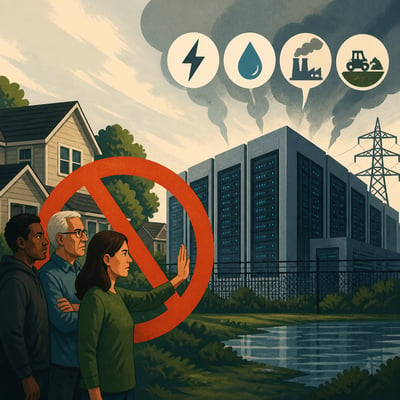
Data center projects are facing stronger public resistance across the United States, with multiple surveys showing roughly seven in ten respondents oppose facilities near their communities or favor slower construction. Concerns focus on electricity prices, grid strain, water use, pollution, land conversion, noise, and whether local jobs and tax revenue offset those costs. The resistance is translating into moratoriums, tighter state and local rules, zoning challenges, project delays, and greater scrutiny from lenders and regulators.
Articles: 17
Last Updated: 09/21/2026
- 88
New Jersey Tightens AI Data Center Rules
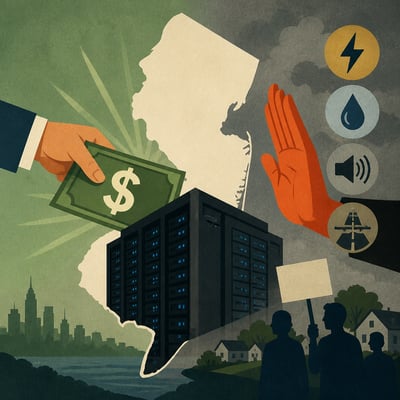
New Jersey is shifting from broadly attracting AI data centers with tax credits toward requiring developers to account for grid costs, provide greater transparency, and meet stronger operating and community safeguards. The state has paused new applications to its $500 million Next New Jersey Program-AI while lawmakers debate ending unallocated credits, even as business and labor groups argue incentives are needed to compete for investment. CoreWeave’s $1.8 billion Kenilworth facility, already approved for up to $250 million in credits, remains under construction and is expected to require as much as 250 megawatts of electricity.
Articles: 8
Last Updated: 08/31/2026
- 85
El Paso Tightens Data Center Rules
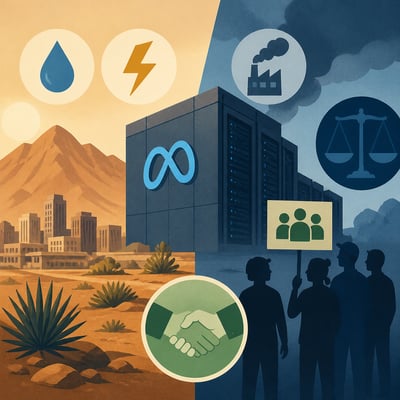
Meta is developing a large AI data center campus in Northeast El Paso, with construction, major tax incentives, and projected demands of up to 2.5 million gallons of water per day at full buildout. Residents and local groups have raised concerns about water availability, electricity use, emissions, noise, construction impacts, and transparency, while city officials weigh the project’s tax and economic benefits against potential public costs. El Paso has responded by requiring stronger permits, disclosures, setbacks, cooling standards, and community commitments for future data centers, while existing contractual obligations to Meta remain in place.
Articles: 8
Last Updated: 08/21/2026
- 84
Virginia Rewrites The Data Center Deal

Virginia lawmakers are reshaping the state’s data center policy by retaining the sales and use tax exemption while adding an electricity consumption tax capped at $600 million annually and directing further study of industry impacts. The compromise reflects a broader dispute over whether data centers’ jobs and economic output justify forgone tax revenue, grid costs, and community effects. Large projects remain active or under review, but zoning litigation, local opposition, and potential changes to incentives are increasing uncertainty around future development.
Articles: 129
Last Updated: 09/21/2026
- 84
Arizona Freezes Data Center Tax Breaks

Arizona has suspended new applications and renewals for its data center tax exemption program for three years under the budget that took effect July 1, 2026. The pause gives Gov. Katie Hobbs and lawmakers time to reconsider whether incentives created in 2013 still justify their fiscal cost as projects place greater demands on electricity, water, land, and local infrastructure. The decision does not prohibit data center construction, but it increases policy uncertainty for developers and shifts attention toward who should pay for the costs of future projects.
Articles: 8
Last Updated: 07/09/2026
- 80
Microsoft Expansion Raises Emissions And Demand

Microsoft is expanding AI data center capacity in Texas, Wisconsin, and other locations while reporting a 25 percent year-over-year increase in greenhouse gas emissions to 20 million metric tons of CO2 equivalent in fiscal 2025. The company attributes the increase mainly to data center growth and changes in renewable-energy accounting, including its decision to stop buying unbundled renewable energy certificates. The expansion is also increasing demand for electricity, water, land, and construction, prompting new power arrangements, utility-rate changes, and local scrutiny even as Microsoft maintains its goal of becoming carbon negative by 2030.
Articles: 12
Last Updated: 07/30/2026
- 79
Michigan Data Centers Meet Local Limits
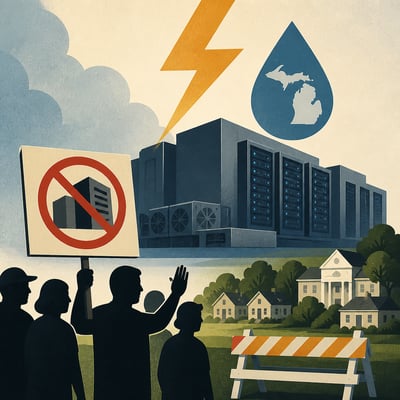
Michigan is seeing a rapid increase in proposed data centers, while communities and state officials debate whether existing zoning, utility, environmental, and tax rules can manage their effects. Moratoriums, delayed reviews, lawsuits, recall efforts, and public opposition have slowed or challenged projects in several townships and cities, even as major facilities backed by Oracle, OpenAI, Google, and others advance. The central policy dispute concerns who should pay for added electricity and water demand, how much local control should remain, and whether tax incentives and project negotiations should be disclosed.
Articles: 61
Last Updated: 08/31/2026
- 78
Colorado’s Data Centers Face Local Limits
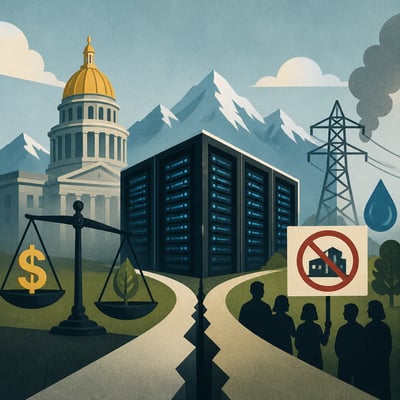
Colorado lawmakers failed to establish either statewide data center incentives or regulatory safeguards, leaving decisions increasingly to counties and municipalities. Denver, Weld, Larimer, Logan, Jefferson County, and other jurisdictions have used moratoriums, zoning rules, utility requirements, and environmental reviews to address electricity demand, water use, noise, land use, and community impacts. The unresolved state framework creates differing requirements for developers while utilities and stakeholders continue debating who should pay for grid expansion and how new facilities should meet environmental standards.
Articles: 9
Last Updated: 09/04/2026
Secondary
- 78
Counties Pause Data Center Plans
Counties and municipalities in Nebraska, Kansas, Illinois, Colorado, New Mexico, Utah, Missouri, and other states are delaying or reviewing data center projects while they develop local rules. Moratoria generally range from 180 days to 18 months and are intended to assess water supply, electricity capacity, roads, noise, environmental effects, decommissioning, and permitting standards. The pattern shows local governments trying to establish clearer requirements before projects advance, although the scope and legal status of each pause differ.
Articles: 54
Last Updated: 09/08/2026
- 74
Missouri Communities Challenge Data Centers
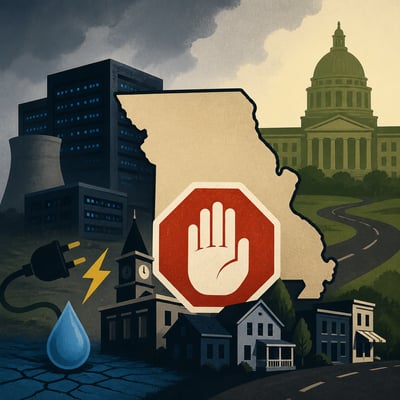
Missouri communities are challenging proposed hyperscale data centers as local officials and state lawmakers debate rules for water use, electricity costs, land use, tax incentives, noise, pollution, and public disclosure. St. Charles has prohibited large-scale facilities, Pacific has paused new applications, and opposition in places such as Festus has influenced local elections. Statewide legislation did not pass during the 2026 session, leaving development decisions increasingly shaped by local moratoriums, zoning proposals, public hearings, and legal or electoral campaigns.
Articles: 12
Last Updated: 09/02/2026
- 72
Kansas Data Centers Meet Local Limits
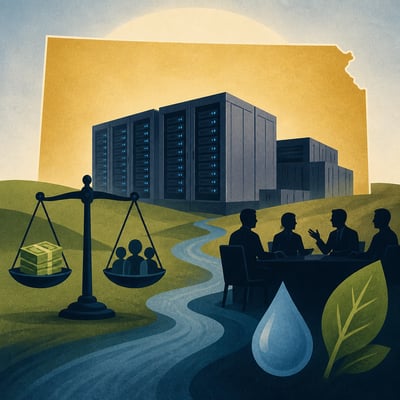
Data center proposals across Kansas and the Kansas City region are advancing alongside stronger local scrutiny and organized opposition. Communities are weighing potential investment and tax-base growth against electricity costs, water use, noise, environmental risks, transparency, and the terms of tax incentives. Several proposals have been withdrawn or rejected, while major campuses in De Soto, Edgerton, and Shawnee County remain subject to planning, permitting, or public review.
Articles: 68
Last Updated: 09/03/2026
- 71
Fort Worth Reconsiders Data Center Growth
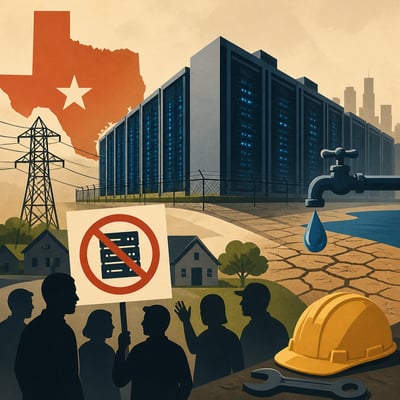
Fort Worth is reconsidering how it permits and regulates new data centers after a zoning commission rejected proposed development standards and a majority of council members backed exploring a temporary moratorium. Officials are weighing updated rules for land use, setbacks, noise, water use, cooling, infrastructure, and economic incentives while reviewing major proposals linked to Black Mountain and Edged Data Centers. The process could delay new approvals and establish tighter requirements, but a moratorium has not been enacted and the final regulatory timeline remains unsettled.
Articles: 33
Last Updated: 09/04/2026
- 71
West Virginia's Data Center Tradeoffs
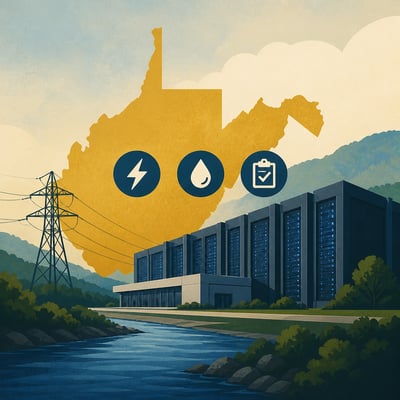
West Virginia is pursuing large hyperscale data centers while shifting major permitting and policy authority toward the state under House Bill 2014 and a proposed 20-year development plan. Projects led by Monarch Compute, Fundamental Data, and other prospective developers could require hundreds of megawatts to more than 1 gigawatt of power, new generation and utility infrastructure, and substantial land and water resources. The expansion has prompted disputes over local zoning, public disclosure, property impacts, air emissions, land ownership, and how project revenue should be shared between the state, counties, utilities, and residents.
Articles: 30
Last Updated: 09/13/2026