
 Climate
 Privacy
 Bob Dylan
 Drones
 Data Centers
 AI Governance
 2026 Maine Senate Race
Autonomous Drone Operations
The ongoing major issues seen in articles and topics over time.
The Drivers
18
Articles Related
184
The Big Picture

Drone operations are moving toward AI-assisted autonomy, including GPS-denied navigation, visual positioning, PNT integrity, spatial AI, onboard localization and targeting, fleet orchestration, one-to-many control, swarm coordination, sensor fusion, and human-in-the-loop mission management. The issue covers civilian and military software layers that make larger-scale drone operations practical.
Autonomy is the enabling layer for scaling drones beyond individually piloted aircraft. It affects labor requirements, safety certification, military advantage, data governance, targeting, command-and-control, and the feasibility of dense drone operations.
Categories
Autonomy, AI & Software, Military Drones & Battlefield Use, Public Safety, Emergency Response & Government Use, Delivery, Logistics & Advanced Air Mobility
Keywords
drone autonomy, fleet orchestration, one-to-many control, swarm coordination, AI target recognition, mission planning, human-in-the-loop, sensor fusion, detect and avoid, autonomous navigation, multi-drone operations, command and control, AI-enabled drones, autonomous swarms, jammed-environment autonomy, machine-to-machine targeting, autonomous target classification, autonomous interceptors, AI-powered interceptor drones, docked autonomous drones, bio-inspired navigation, visual homing, autonomous inspection flights, edge autonomy
The Drivers
The Topics below, and their articles, all focus on, exemplify, or help to explain this theme.
Primary
- 99
Shield AI Expands Hivemind Autonomy
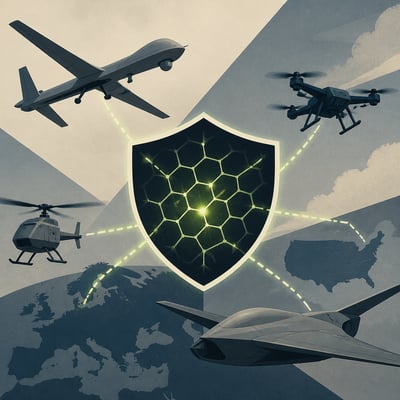
Shield AI is expanding Hivemind from platform-level autonomy into counter-drone interceptors, coordinated attack-drone swarms, and aircraft using UAV Navigation-Grupo Oesía flight-control systems. Tests with Destinus validated a complete Hornet counter-UAS mission, while the Pentagon selected Shield AI to support swarm autonomy for LUCAS, according to the company. The developments could shorten integration timelines and allow fewer operators to manage drones that adapt to changing conditions, but several capabilities remain at the demonstration or planned-evaluation stage.
Articles: 4
Last Updated: 06/19/2026
- 98
Quadrotors Master Narrow-Gap Flight
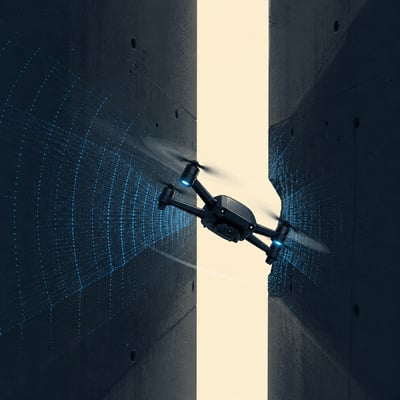
Zhejiang University researchers developed a sensorimotor control policy that converts onboard camera and flight-state data directly into motor commands, allowing quadrotors to traverse narrow, tilted, and moving gaps without GPS, motion capture, or prior knowledge of gap position. Trained with reinforcement learning in simulation and supported by model-based trajectory initialization, the system was demonstrated in real-world tests, including a reported 5-centimeter-clearance passage and maneuvers at tilt angles up to 90 degrees. The work could improve drone operations in confined environments such as collapsed structures, industrial sites, tunnels, and pipelines, while its broader operational reliability remains to be established.
Articles: 3
Last Updated: 06/23/2026
- 98
Trident Scales Autonomous Targeting System For Drones
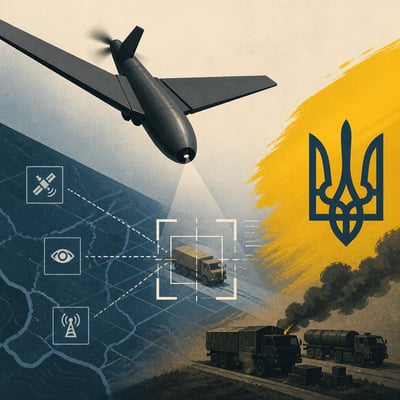
Ukraine is testing and scaling AI-assisted targeting for strike drones, moving from image-based target recognition toward terminal guidance and, eventually, autonomous target selection. Trident is developing a modular system for fixed-wing and multirotor platforms, while Ukrainian forces are integrating reconnaissance, data fusion, and multiple strike ranges against Russian logistics. The technology could reduce dependence on continuous operator links and satellite navigation, but fully autonomous attack decisions remain at an early testing stage and broader military approval is still pending for at least one system.
Articles: 3
Last Updated: 07/08/2026
- 97
U.s. Drone Manufacturing And Autonomy Push

U.S. drone companies are expanding both the physical capacity to build aircraft domestically and the software needed to coordinate multiple drones in public safety, defense, and infrastructure missions. Skydio announced a planned $3.5 billion U.S. manufacturing and supply-chain investment alongside a $110 million funding round, while SkyfireAI raised $11 million to develop AI software for multi-drone mission management. The developments point to increased demand for U.S.-made drones and more scalable operations, although regulatory limits and execution risks remain significant.
Articles: 8
Last Updated: 07/23/2026
- 96
Niantic Spatial Builds GPS-Resilient Drone Maps
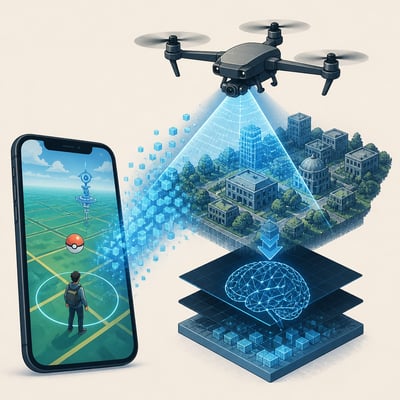
Niantic Spatial is applying large-scale 3D mapping and camera-based positioning to help drones and other autonomous systems operate when GPS is unavailable, spoofed, jammed, or interfered with. Its partnership with Vantor links visual localization with terrain and aerial-navigation software for defense use, while a separate Spexi partnership expands drone imagery collection and 3D reconstruction for AI and robotics. The use of scans collected from Pokémon Go players has raised questions about consent, data reuse, and whether civilian-generated imagery can be traced after it has been absorbed into trained models.
Articles: 8
Last Updated: 07/15/2026
- 96
Cornell Tests Autonomous Drone Coordination
Cornell University’s Project Orion is building a mixed-reality test environment in which real drones interact with simulated aircraft, buildings, hazards, emergency conditions, and degraded communications. Led by doctoral student Mehrnaz Sabet with support from NASA and other partners, the project tests tactical deconfliction, vehicle-to-vehicle communication, and autonomous responses before deployment in shared airspace. Its applications include delivery, wildfire monitoring, emergency response, and reconstruction of real-world drone incidents.
Articles: 3
Last Updated: 06/23/2026
- 95
Saildrone Expands U.s. Maritime Missions
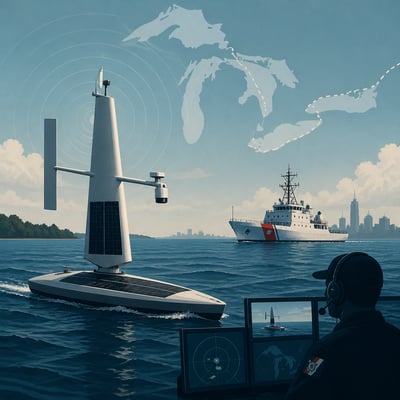
U.S. agencies are deploying long-duration drones to maintain persistent coverage in difficult maritime environments. The Coast Guard is using Saildrone Voyager vessels on the Great Lakes and in the Northeast for maritime awareness, border monitoring, fisheries enforcement, and emergency support, while NOAA is using Saildrone surface vehicles and testing Black Swift aerial drones to improve hurricane observations and forecasts. These systems extend data collection without continuous crewed patrols or aircraft exposure, but deployment scale, data governance, cost, and operational effectiveness remain areas of uncertainty.
Articles: 10
Last Updated: 07/31/2026
- 91
DJI O4 Ground Station Extends Drone Links
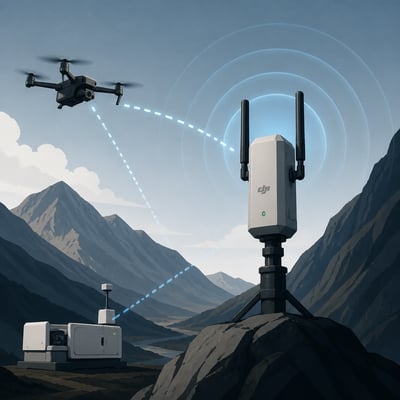
DJI has launched the O4 Ground Station, a fixed communications hub designed to preserve drone video and control links across remote, obstructed, or interference-heavy environments. Gateway Mode connects DJI Dock 3 operations to FlightHub 2 over the internet, while Relay Mode can pass signals through areas without reliable network coverage; DJI cites coverage of up to 30 kilometers with Dock 3 and up to 40 kilometers with the Matrice 400 under favorable conditions. The system’s Dock 3 integration also adds coordinated firmware support and improved altitude-above-ground monitoring, potentially supporting more reliable unattended inspection, public safety, surveying, and emergency missions.
Articles: 3
Last Updated: 06/18/2026
- 89
Military Drones Shift Toward Swarms
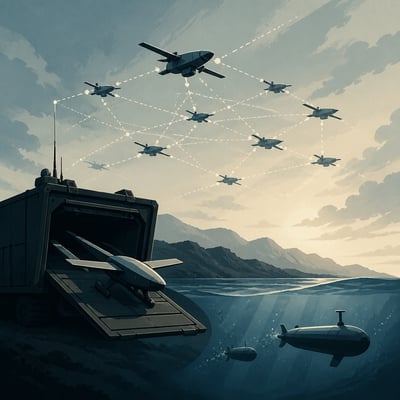
Military drone programs are moving toward larger fleets of low-cost FPV aircraft, autonomous coordination, and systems that let one operator manage multiple drones. Ukraine is a central reference point for production and battlefield experimentation, while U.S. programs and European investment are seeking to scale comparable capabilities. The shift is increasing demand for swarming software, counter-drone defenses, resilient supply chains, and manufacturing capacity, but the effectiveness and maturity of more autonomous systems remain uneven.
Articles: 46
Last Updated: 07/29/2026
- 77
Drones Face Failure Safety Test

A large drone-show failure at Sydney’s Vivid festival exposed the safety challenges created when radio conditions disrupt an autonomous fleet, sending more than 80 drones into Cockle Bay and onto a foreshore boardwalk without reported injuries. The incident led to the cancellation of the remaining shows and renewed attention to how drones should detect faults, choose safe landing responses, and operate within geofenced areas. Research from Delft University of Technology and Wageningen University & Research points to sensor-based early-warning indicators that could identify declining stability before a drone loses control.
Articles: 10
Last Updated: 07/09/2026
Secondary
- 79
Autonomous Drone Finds Pan Am Wreckage
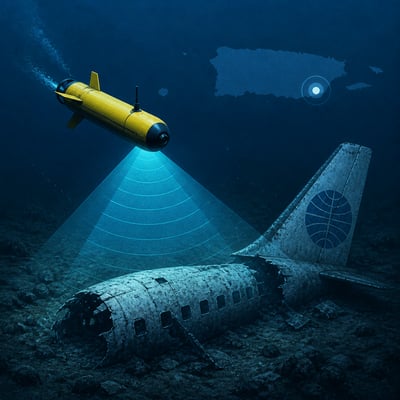
An autonomous underwater sonar drone located the fuselage and tail of Pan Am’s Clipper Endeavor in roughly 2,000 feet of water off Puerto Rico, 74 years after the 1952 crash. Researchers narrowed the search using archival records and historical weather data after an earlier attempt was disrupted by bad weather. The discovery highlights how autonomous sonar technology, including systems originally developed for undersea mine detection, can support difficult maritime investigations and recoveries.
Articles: 7
Last Updated: 07/22/2026
- 78
Police Drone Networks Expand Amid Privacy Gaps
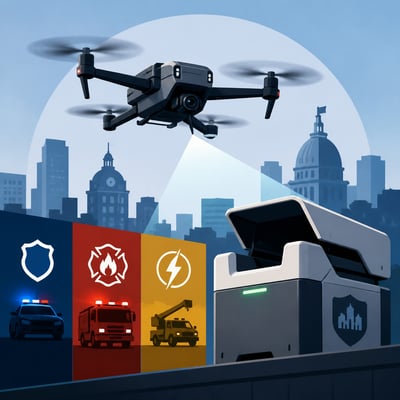
Police departments in San Francisco, St. Paul, Montgomery County, and Orlando are expanding or formalizing docked drone programs that provide rapid aerial video for 911 calls, vehicle pursuits, searches, and other high-risk incidents. These systems can shorten response times and give officers live thermal and optical views before ground units arrive, but their growth is accompanied by concerns about incidental surveillance, weak purpose logging, data retention, and access controls. The exposure of live SFPD feeds shows how operational footage can reveal bystanders, private spaces, location data, and pilot information when sharing settings are improperly configured.
Articles: 31
Last Updated: 07/26/2026
- 78
Marine Corps Expands Autonomous UAS Programs
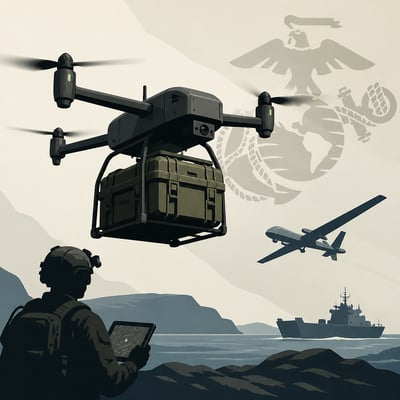
The U.S. Marine Corps is expanding autonomous UAS programs to support dispersed forces operating from ships and austere sites, with applications ranging from cargo resupply and persistent ISR to electronic warfare and strike. Key efforts include the MARV-EL logistics aircraft, the MUX TACAIR collaborative combat aircraft, and a modular command-and-control architecture intended to connect multiple UAS types. The programs could reduce exposure of crews and extend reach in contested areas, but weight, operator workload, maintenance, autonomy maturity, and testing timelines remain important barriers to fielding.
Articles: 4
Last Updated: 06/02/2026
- 76
Waiv Automates Drone Landings At Sea
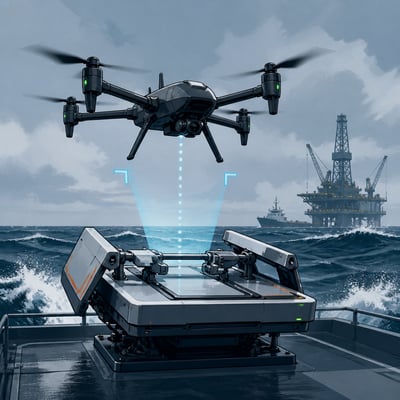
WaiV Robotics is developing and launching an autonomous platform that helps VTOL drones take off, land, and redeploy from moving vessels in challenging sea conditions. The system combines a gyro-stabilized landing pad, sensors, predictive flight guidance, and an automatic locking mechanism, while supporting multiple drone configurations without aircraft modifications. The technology is aimed at offshore inspection, energy, surveillance, search-and-rescue, and government missions where unreliable recovery and the need for highly skilled pilots have limited maritime drone use.
Articles: 4
Last Updated: 07/06/2026
- 74
U.s. Sea Drones Rescue And Strike

Military drones are taking on a wider role in the U.S.-Iran conflict, from reported Iranian attacks on aircraft to U.S. use of Corsair unmanned boats for maritime rescue and a reported strike on Iran’s Bandar Abbas naval base. The activity shows sea drones moving beyond surveillance into life-saving and offensive missions, while reports of coordinated Iranian drone formations point to a potentially more difficult air-defense challenge. Several incidents, including the cause of an Apache crash and the nature of the reported drone formation, remain under investigation or disputed.
Articles: 19
Last Updated: 07/13/2026
- 73
SOCOM Builds Drone Mothership Force
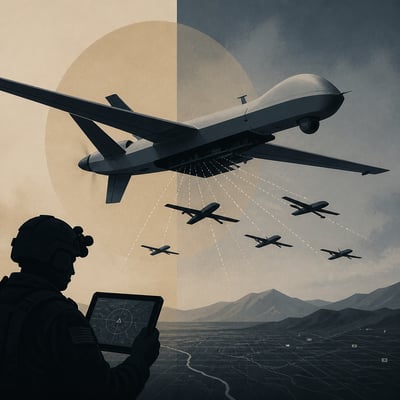
U.S. Special Operations Command is expanding the MQ-9 Reaper beyond traditional strike and surveillance missions, planning to use it as a control and communications platform for smaller drone groups. Its fiscal 2027 request also reduces planned OA-1K Skyraider II purchases and funds more autonomous systems, specialized training ranges, and an autonomous warfare proving ground. The shift reflects preparation for contested environments where electronic warfare, air defenses, distributed sensing, and low-cost drones can affect mission survivability and tempo.
Articles: 4
Last Updated: 05/27/2026
- 72
Cheap Drones Reshape Air Defense

Low-cost drones, especially Shahed-style one-way systems, are being used at scale in Ukraine and the Middle East to strike military targets, air defenses, energy facilities, and shipping routes. Their low production cost can force defenders to spend far more on missiles and conventional systems, prompting Ukraine and NATO to expand interceptor drones, sensors, electronic warfare, and other layered defenses. The central shift is toward affordable systems produced in large numbers, while autonomy, jamming resistance, and human control remain unresolved operational issues.
Articles: 14
Last Updated: 07/28/2026
- 71
New Drone Interceptors Target Shahed Threats
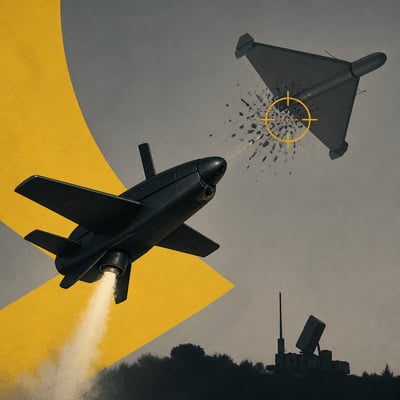
Granta Autonomy, Rafael and SpearUAV have introduced compact interceptor drones intended to engage Shahed-class strike drones, loitering munitions and other aerial threats. Black Wasp emphasizes VTOL deployment, autonomous guidance and operation during GPS disruption, while Iron Wasp is positioned as a canister-launched, vehicle-mounted interceptor within a layered defense system. The launches reflect continued efforts to provide faster, more deployable and potentially lower-cost alternatives or complements to missiles, guns and electronic warfare, but reported performance remains partly based on manufacturer claims.
Articles: 3
Last Updated: 06/25/2026