
 Climate
 Privacy
 Bob Dylan
 Drones
 Data Centers
 AI Governance
 2026 Maine Senate Race
FAA Proposes Critical-Site Drone Restrictions
Coverage from DRONELIFE, Avweb, and others
Articles
12
Active Days
77
The Topic
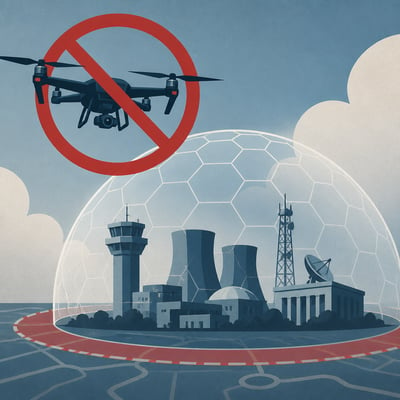
The FAA has proposed a long-delayed Section 2209 framework allowing eligible fixed-site facilities to request Unmanned Aircraft Flight Restrictions over portions of their property, generally up to 400 feet above ground level. The proposal would require facilities to demonstrate specific security or safety risks while preserving limited transit paths for certain authorized operators that broadcast Remote ID and provide advance notice. It could give critical sites a clearer mechanism to address unauthorized drone flights, but stakeholders are debating access for lawful commercial and journalistic operations, public visibility of restrictions, review procedures, and the limits of facility counter-drone powers.
First Article: 05/05/26
Latest Article: 07/20/26
Summary
- The FAA’s Section 2209 proposal creates standard and special UAFRs for eligible fixed-site facilities across 16 critical-infrastructure sectors.
- Standard restrictions would generally remain within facility property lines and extend from the ground to 400 feet above ground level.
- Facilities would need to document vulnerabilities, nearby drone activity, existing security measures, and the consequences of a potential drone incident.
- Certain Part 91, Part 107, Part 108, Part 135, and Part 137 operations could transit standard UAFRs if they meet Remote ID, notification, and rapid-transit conditions.
- The proposal would bar recreational operations in UAFRs and could impose civil or criminal penalties in some sensitive or national-security designations.
- UAFR approval would not authorize facilities to jam, capture, disable, or otherwise interfere with drones.
- Commercial drone groups support a national framework but seek workable access, while journalists and civil-liberties groups want clearer publication, expiration, review, and challenge procedures.
History
The biggest change is that the FAA proposal now looks more operationally defined and more restrictive: it adds explicit limits on recreational flights, clarifies transit conditions, and highlights potential penalties in sensitive designations. The debate also broadens from access-versus-security to include publication and review procedures for restrictions.
The story has shifted from general FAA rulemaking debate to a more specific proposed Section 2209 framework for facility-based drone restrictions, including concrete boundary, eligibility, and transit rules. The main new issue is the tension between standardized security protections and preserving lawful access, especially for journalism and other compliant operations, while the public comment period remains open.
Featured
Timeline: 77 Days
Hover over any logo to see coverage summary, click for full article.