History
07/27/20260 new articles
The biggest change is that the FAA proposal now looks more operationally defined and more restrictive: it adds explicit limits on recreational flights, clarifies transit conditions, and highlights potential penalties in sensitive designations. The debate also broadens from access-versus-security to include publication and review procedures for restrictions.
07/25/20260 new articles
The story has shifted from general FAA rulemaking debate to a more specific proposed Section 2209 framework for facility-based drone restrictions, including concrete boundary, eligibility, and transit rules. The main new issue is the tension between standardized security protections and preserving lawful access, especially for journalism and other compliant operations, while the public comment period remains open.
- FAA proposed a Section 2209 UAFR framework for eligible fixed-site facilities.
- Standard UAFRs would generally remain within property lines and 400 feet AGL.
- Applicants must document vulnerabilities, incident consequences, and existing security measures.
- Certain compliant Part 91, 107, 108, 135, and 137 flights may transit restricted areas.
- FAA extended the public comment deadline to August 5, 2026.
07/24/20268 new articles
The FAA rulemaking has broadened from a general critical-infrastructure drone restriction proposal into a more contested and operationally detailed process, with heavy public comment and sharper scrutiny over access for journalism and lawful flights. The main change is not the basic policy direction, but the heightened controversy and clearer outlines of the final rule’s safeguards and exceptions.
- Comment period extended to August 5, 2026.
- Heavy public participation indicates unresolved disagreement.
- Press groups cite insufficient transparency and safeguards.
- Civil-liberties groups have joined the comment debate.
- Eligibility criteria are now part of the proposed process.
05/30/20260 new articles
The story is mostly stable, but the latest version clarifies the legal basis and broadens the framing from a proposed petition process to a more defined FAA rulemaking tied to Section 2209 and wider airspace integration. It also softens the earlier emphasis on commercial, public safety, and media impacts into a broader concern about lawful drone activity near sensitive sites.
05/22/20260 new articles
The story has been reframed from a general FAA proposal for UAFR restrictions into a more explicit petition-based framework with defined approval tiers and clearer emphasis on balancing security with authorized drone activity. The core issue is still regulatory, but the current version adds more specificity about how sites would seek protection and how stricter categories would be approved.
05/21/20261 new articles
The story has shifted from a general proposal to a more concrete Section 2209 rulemaking with clearer structure and enforcement details. The new version also adds emphasis on security threats and makes the balance between protection and lawful drone use more explicit.
05/19/20260 new articles
The update is mostly a reframing of the FAA proposal rather than a substantive shift: the restriction framework is now described more formally, with clearer language around sensitive fixed sites and standardized restricted-airspace designations. The core balance between site security and preserving drone access remains unchanged.
05/18/20260 new articles
The FAA’s proposal is now framed more concretely as an active petition-based rulemaking process, with explicit notice and enforcement mechanics rather than just a generic restriction plan. The story also adds that the main unresolved issue is how the final rule will balance security against commercial and public-safety drone access.
05/17/20260 new articles
The story has shifted from a general proposal into a more concrete NPRM-backed process, with the FAA now spelling out formal petition-based restrictions, tiered categories, and a public comment stage. The main new emphasis is on implementation details and how broadly the final restrictions may reach.
05/16/20260 new articles
The story is now framed more explicitly as an implementation-stage rulemaking under Section 2209, with less emphasis on the prior eligibility details and more on how the FAA will administer restricted airspace around sensitive sites. The current version also adds specific operational tools like Remote ID, FAA airspace systems, and B4UFLY as part of enforcement and notice.
05/15/2026Topic Formed
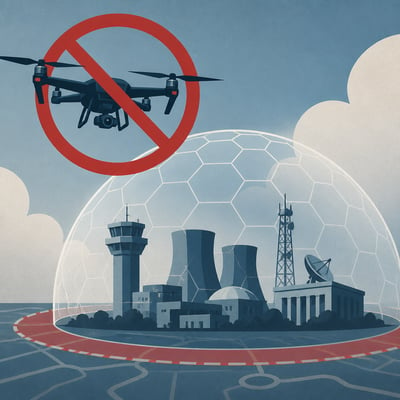
The FAA has proposed a rule to let eligible critical infrastructure operators petition for drone flight restrictions around fixed sites. The framework would create defined airspace zones, with stricter special restrictions for higher-risk locations and clear compliance duties for lawful drone operators. The rule is intended to balance site security with continued commercial and public safety drone use, and it remains open to public comment before final adoption.

 Climate
 Privacy
 Bob Dylan
 Drones
 Data Centers
 AI Governance
 2026 Maine Senate Race