History
07/23/20260 new articles
The story now places greater emphasis on formal safeguards and litigation, with human review, independent oversight, and lawsuits becoming central to how these data-sharing efforts are being contested. It also sharpens the concern that privacy risks are not just theoretical but could directly deter immigrant families and program participants from using public services.
07/23/20260 new articles
The story has broadened from Medicaid-immigration data disputes into a wider cross-government debate over using sensitive public data for AI-assisted analysis, fraud detection, research, and administrative decision-making. That expansion adds new actors and new privacy concerns around consent, notice, human review, and reidentification.
- Maryland says more than 50 agencies now use AI tools.
- DOJ's Health Care Fraud Unit is using Medicaid analytics for fraud detection.
- A Wisconsin FoodShare pilot could link SNAP and Medicaid data.
- Municipal labor talks involve aggregated worker health data and insurer partnerships.
- The debate now includes notice, consent, opt-out, and human-review demands.
07/21/20263 new articles
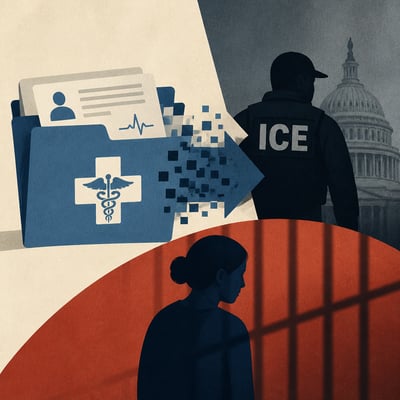
The story has sharpened from a general tug-of-war over government data sharing into a more specific fight over federal Medicaid-linked records being used for immigration enforcement. The latest version adds active court and state-ag litigation, plus Maryland’s new privacy restrictions, making the dispute look more operationalized and legally immediate.
- Federal Medicaid data use for immigration enforcement is now the dominant pattern.
- Courts and state attorneys general are actively challenging CMS-ICE sharing and retention.
- Maryland enacted new privacy limits on data sales and cooperation with civil immigration enforcement.
- Practical safeguards now include warrants, minimization, deletion, and purpose limits.
- The timeline extends into July 2026 with latest developments.
05/30/2026Topic Formed
Recent coverage shows governments tightening or contesting access to personal data used in immigration enforcement, health programs, and public benefits. The main pattern is a push-pull between data sharing for enforcement or administration and new limits, lawsuits, and privacy safeguards meant to protect trust and access to services.

 Climate
 Privacy
 Bob Dylan
 Drones
 Data Centers
 AI Governance
 2026 Maine Senate Race