
 Climate
 Privacy
 Bob Dylan
 Drones
 Data Centers
 AI Governance
 2026 Maine Senate Race
Waymo Robotaxis Alert Police
Coverage from NPR, Houston Chronicle, and others
Articles
23
Active Days
75
The Topic
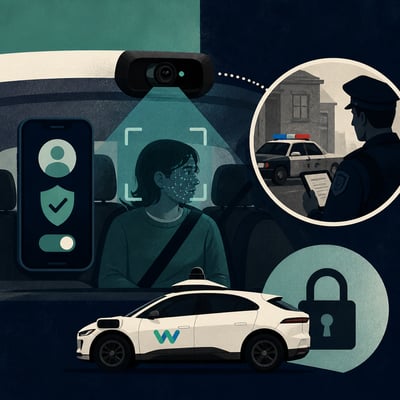
Waymo robotaxis are drawing scrutiny after the company alerted San Mateo police about two teenage passengers and remotely moved the vehicle to a parking lot following reports of drinking and firing water beads. The incident highlights how onboard cameras, microphones and remote support can turn a driverless taxi into both a safety system and a source of evidence for law enforcement. A separate San Francisco burglary investigation raised additional questions about data retention after interior footage had been purged before police served a warrant.
First Article: 05/01/26
Latest Article: 07/14/26
Summary
- Waymo contacted San Mateo police and remotely moved a robotaxi carrying two teenage passengers into a parking lot after reported drinking and water-bead firing.
- The intervention underscores a tension between using onboard monitoring for passenger and public safety and preserving privacy inside an ostensibly private vehicle.
- Waymo says interior cameras support cleanliness checks, lost-item recovery and emergency assistance, with support staff able to review footage in some circumstances.
- Waymo says it does not use facial recognition or biometric identification, but the company has not publicly disclosed a complete video-retention schedule.
- In a separate San Francisco burglary case, police obtained a warrant for Waymo account details and exterior video, while interior footage had already been purged.
- The boundaries for passenger notice, emergency monitoring and disclosure of robotaxi recordings to police remain unsettled.
History
The core incident is unchanged, but the framing has tightened around privacy and evidence retention: the new version more explicitly emphasizes sensor-based monitoring, police access, and the unresolved retention rules governing robotaxi footage. It also adds a clearer law-enforcement detail in the burglary case, where interior video was already purged before the warrant.
The story shifted from a general privacy debate about Waymo monitoring to a specific enforcement episode in which Waymo alerted police, remotely moved a vehicle, and officers intervened. The new details sharpen concerns about live oversight, passenger notice, and how quickly in-cabin footage may disappear before law enforcement can obtain it.
Featured
Timeline: 75 Days
Hover over any logo to see coverage summary, click for full article.