History
07/23/20260 new articles
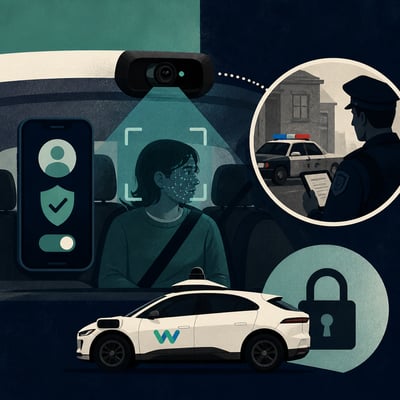
The core incident is unchanged, but the framing has tightened around privacy and evidence retention: the new version more explicitly emphasizes sensor-based monitoring, police access, and the unresolved retention rules governing robotaxi footage. It also adds a clearer law-enforcement detail in the burglary case, where interior video was already purged before the warrant.
07/22/20260 new articles
The story shifted from a general privacy debate about Waymo monitoring to a specific enforcement episode in which Waymo alerted police, remotely moved a vehicle, and officers intervened. The new details sharpen concerns about live oversight, passenger notice, and how quickly in-cabin footage may disappear before law enforcement can obtain it.
- Waymo alerted San Mateo police after detecting alleged misconduct.
- Waymo remotely directed the robotaxi to a parking lot.
- Police said two teenagers were drinking alcohol and firing Orbeez water beads.
- San Francisco burglary footage was purged before a warrant was served.
- Experts framed the issue as notice, consent, and evidence preservation.
07/17/202620 new articles
The story has broadened from Waymo's rider-age and footage-retention issues into a wider robotaxi privacy frame, adding microphones, remote controls, and more explicit law-enforcement involvement. It now also extends beyond the U.S. to China, where trip-data and cross-border governance concerns introduce a new regulatory dimension.
- Waymo monitoring now includes microphones and remote controls.
- Reports describe privacy-preserving footage retention limits and face blurring.
- XPENG robotaxi testing in Guangzhou raises cross-border data issues.
- Police reporting and alerts are now part of the privacy discussion.
- Age verification is now an active operational use case.
06/10/2026Topic Formed
Waymo is using in-cabin cameras, support calls, and account controls to enforce its rules on underage riders, but the system is also flagging some adults by mistake. The same camera-heavy design is drawing attention in privacy and law-enforcement contexts, including a San Francisco burglary case where police sought vehicle footage and account data. Together, these stories show the operational tradeoff between rider verification, safety monitoring, and privacy limits in autonomous vehicles.

 Climate
 Privacy
 Bob Dylan
 Drones
 Data Centers
 AI Governance
 2026 Maine Senate Race