
 AI Governance
 Data Centers
 Drones
 Climate
 Privacy
 2026 Maine Senate
 Bob Dylan
Climate Diplomacy And Finance
The ongoing major issues seen in articles and topics over time.
The Drivers
11
Articles Related
159
The Big Picture
Multilateral climate governance is increasingly focused on turning Paris Agreement commitments into operational rules, finance flows, transition roadmaps, and accountability mechanisms. This issue covers UNFCCC negotiations, COP implementation agendas, adaptation and mitigation finance, loss-and-damage governance, fossil-fuel phaseout diplomacy, and disputes over equitable implementation.
International climate diplomacy shapes the resources, rules, and political bargains that determine whether national climate commitments become deliverable policy. Finance disputes, equity concerns, implementation gaps, and phaseout negotiations will continue to influence trust between countries, transition investment, adaptation capacity, and the credibility of the global climate regime.
Categories
Policy, Regulation & Governance, Economics & Finance, Mitigation: Energy Transition, Adaptation & Resilience, Social, Equity & Justice Dimensions
Keywords
UNFCCC negotiations, COP implementation, Paris Agreement implementation, climate finance negotiations, adaptation finance, mitigation finance, loss and damage fund, just transition finance, fossil fuel phaseout roadmap, global stocktake, nationally determined contributions, NDC implementation, mitigation work programme, international climate governance, climate finance goal, transition roadmaps, Bonn climate talks, COP agenda
The Drivers
The Topics below, and their articles, all focus on, exemplify, or help to explain this theme.
Primary
- 98
Bonn Talks Stall Climate Finance

UN climate negotiations in Bonn produced limited progress ahead of COP31, with climate finance, adaptation support and implementation disputes intensified by geopolitical tensions and the absence of a US federal delegation. Electrification emerged as a prominent proposed priority, while negotiators also debated how to describe the 1.5C limit and climate tipping points. The talks showed some convergence around a just transition, but unresolved financing and scientific-language disputes continue to constrain collective action.
Articles: 38
Last Updated: 07/27/2026
- 98
IMO Shipping Net-Zero Plan Faces Delay
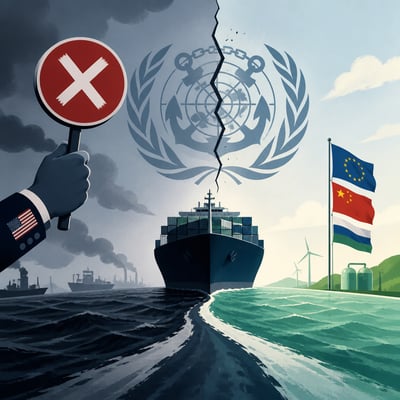
The International Maritime Organization is keeping its proposed Net-Zero Framework for global shipping alive while extending negotiations into the fall. The plan combines progressively tighter marine-fuel emissions standards with fees on emissions above a threshold, using the proceeds to support cleaner fuels, technologies, and developing countries. U.S. opposition, support from some fossil-fuel-aligned states, and alternative proposals could still weaken or block the framework, leaving the shipping industry without a single global standard.
Articles: 9
Last Updated: 08/26/2026
- 96
Colombia Pushes Fossil Fuel Phaseout

Colombia and the Netherlands have launched a coalition-based process to help governments plan a transition away from fossil fuels, following stalled progress in formal climate negotiations. The Santa Marta conference produced commitments to develop national roadmaps, launched a scientific advisory panel, and focused on financing, energy security, fossil fuel subsidies, and the political barriers facing producer countries. Early country experience, particularly in Colombia and Brazil, shows that expanding renewables is more achievable than permanently reducing fossil fuel production and revenue dependence.
Articles: 25
Last Updated: 06/26/2026
- 90
India Sets 2035 Climate Targets

India has approved updated climate commitments for 2031–2035, including a 47% reduction in emissions intensity from 2005 levels, 60% non-fossil electricity capacity and a forest and tree-cover carbon sink of 3.5–4 billion tonnes of CO2 equivalent. The targets build on progress that has already taken India beyond its 2030 clean-power capacity goal, but analysts question whether the commitments are sufficiently ambitious because emissions intensity can fall while total emissions rise with economic growth. Delivery will depend on renewable expansion, storage, industrial technology, financing, carbon-market integrity and the management of continued coal reliance.
Articles: 7
Last Updated: 06/17/2026
- 86
Africa Expands Climate Adaptation

African countries and communities are facing intensifying droughts, floods, heat, food insecurity, and displacement while developing locally led approaches to strengthen resilience. The dominant policy direction is a shift from emergency response toward early warning, climate-resilient agriculture, integrated water and energy planning, and adaptation finance that reaches national and local institutions. Persistent barriers include limited fiscal space, weak insurance coverage, delayed funding, structural inequality, and the continued use of externally designed solutions.
Articles: 10
Last Updated: 07/24/2026
- 86
Climate Migration As Adaptation
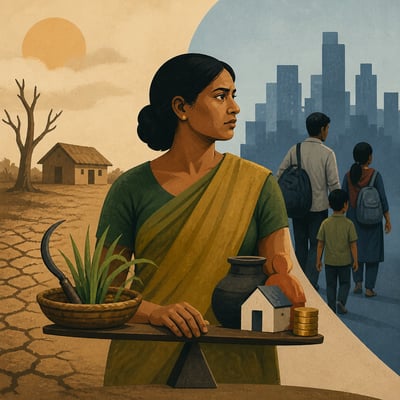
Climate-related migration is increasingly being examined as a possible adaptation response rather than solely as evidence of climate failure or crisis. Movement decisions are usually shaped by climate hazards alongside livelihoods, assets, conflict, health, gender, and access to services, while many people move within national borders or cannot move at all. The material also highlights risks in planned relocation and persistent gaps in definitions, governance, funding, equity, and community participation.
Articles: 13
Last Updated: 07/26/2026
- 74
Europe Faces Fragmented Climate Adaptation

Europe is facing rising losses from floods, droughts, wildfires, heat, and other climate hazards while adaptation planning remains fragmented across countries and sectors. European scientific and policy institutions are calling for common risk scenarios, measurable resilience goals, stronger monitoring, and greater public and private financing. The discussion also increasingly links adaptation to insurance protection, fiscal stability, ecosystem restoration, and flexible planning that can respond as risks change.
Articles: 11
Last Updated: 07/29/2026
- 72
Singapore Accelerates Climate Adaptation

Singapore is making climate adaptation a national priority, with 2026 designated as the Year of Climate Adaptation and a first comprehensive national adaptation plan due in 2027. Measures address extreme heat, coastal flooding, water and food security, and include new coordination, research, and community programs. Singapore is also positioning its financial and technical capabilities to support climate resilience and renewable-energy investment across Southeast Asia, where climate shocks and energy disruptions are closely connected.
Articles: 5
Last Updated: 05/26/2026
- 70
Indigenous Voices In Climate Governance

This topic centers on efforts to bring Indigenous voices and citizen deliberation into climate and food-system governance. Across the material, Indigenous communities, women leaders, and assembly participants argue that climate policy is more effective and legitimate when it reflects lived experience, traditional knowledge, and community priorities. The coverage also shows a growing critique of top-down climate solutions, including carbon markets, monocropping, and decision-making processes that leave affected communities out.
Articles: 5
Last Updated: 07/21/2026
Secondary
- 72
Paris Agreement Carbon Market Launch

UN climate bodies have begun issuing the first credits under the Paris Agreement carbon market, using a Myanmar cookstove project as the initial example. The main tension is between operationalizing cross-border climate finance and proving that the credits are credible, additional, and tightly governed.
Articles: 11
Last Updated: 06/15/2026
- 71
UN Backs ICJ Climate Obligations
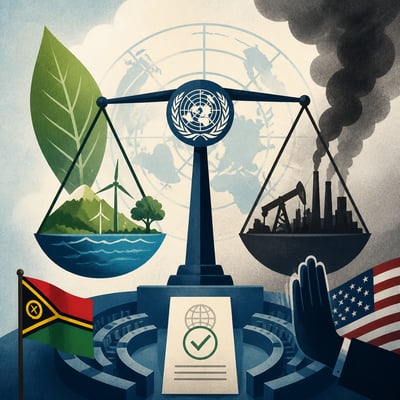
The UN General Assembly adopted a resolution by 141 votes to eight, with 28 abstentions, supporting an International Court of Justice advisory opinion that states have legal obligations to address climate change. Vanuatu and other Pacific island states led the initiative, while the United States and several fossil-fuel-producing or politically opposed states resisted language concerning fossil fuels, temperature limits, and accountability. The resolution is nonbinding, but it gives the ICJ opinion greater political visibility and creates a basis for continued discussion of implementation, climate responsibility, and the protection of vulnerable communities.
Articles: 25
Last Updated: 09/01/2026