
 Climate
 Privacy
 Bob Dylan
 Drones
 Data Centers
 AI Governance
 2026 Maine Senate Race
Africa’s Climate Finance Fight
Coverage from The Conversation, Daily Maverick, and others
Articles
4
Active Days
113
The Topic
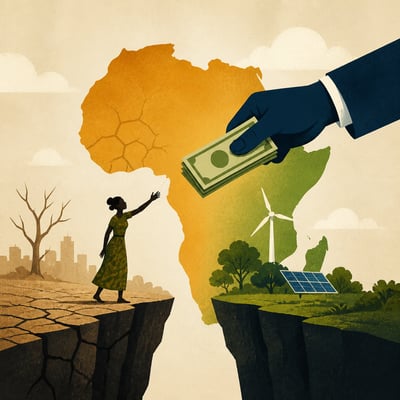
African governments and climate advocates are pressing wealthy countries and international institutions to provide predictable, affordable, and largely public climate finance. The funding is seen as necessary to expand renewable energy and grids, protect communities from floods and droughts, support workers and fossil-fuel-dependent economies, and build domestic clean industries. The central tension is between international calls for Africa to supply climate solutions and demands that historic emitters meet their financing responsibilities without deepening debt or shifting transition costs onto African countries.
First Article: 02/02/26
Latest Article: 05/25/26
Summary
- Finance shortfalls are constraining African investment in adaptation, renewable power, grids, and climate-resilient infrastructure.
- African economies face a difficult transition because fossil fuels remain important for export earnings, government revenue, jobs, and energy access.
- Climate diplomacy has produced commitments and roadmaps, but reporting highlights weak delivery, fragmented finance negotiations, and limited clarity on Loss and Damage funding.
- African policymakers are challenging narratives that cast the continent mainly as a source of carbon offsets, critical minerals, or clean-energy inputs for wealthier economies.
- Proposals emphasize concessional or unconditional public finance, debt relief, technology transfer, skills, and domestic value capture.
- A just transition is framed as requiring protections for workers, vulnerable communities, indigenous rights, and regions dependent on fossil-fuel industries.
History
The story now places greater emphasis on Africa’s just-transition politics, expanding from adaptation and energy finance to include worker protections, fossil-fuel-dependent economies, and domestic clean-industry building. It also sharper frames the dispute around climate diplomacy and Loss and Damage delivery as a broader challenge to wealthy countries’ responsibility.
The story has broadened from a general climate-finance gap into a more specific debate over the structure of finance: African actors are now explicitly rejecting debt-heavy and private-capital-centered models in favor of grants, technology transfer, and domestic value creation. It also puts sharper emphasis on energy transition choices, including fossil-fuel dependence, industrialization, and local economic benefits.
Featured
Timeline: 113 Days
Hover over any logo to see coverage summary, click for full article.