
Last Update: 08/01/2026 at 2:00 PM EST

Carbon Capture Projects Face Cost Tests

Coverage from The Narwhal, Canada's National Observer, and others

Articles

30

Active Days

272

The Topic
Carbon Capture Projects Face Cost Tests topic image

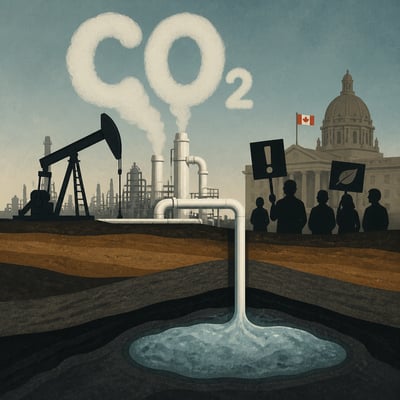
Carbon capture and storage is being advanced as a way to reduce industrial emissions, with Canada’s Pathways project serving as a central test of whether the technology can support Alberta’s oil sands while meeting climate goals. The project’s expected start date, capture volume and cost have worsened from earlier plans, increasing reliance on public incentives and carbon-credit revenues. Across Canada and the United States, proposed facilities also face questions about commercial performance, storage integrity, community consent and whether CCS reduces emissions or enables continued fossil fuel production.

First Article: 10/29/25

Latest Article: 07/27/26

Summary

  • Canada’s Pathways project has been delayed to an initial operating target of 2035, while its planned capture volume has been reduced from earlier projections and estimated costs have increased.
  • Federal and provincial incentives, investment tax credits and carbon-credit programs are central to the financial case for major CCS projects.
  • Critics argue CCS has delivered limited results relative to past Canadian promises and should supplement, not replace, direct reductions in fossil fuel emissions.
  • Community opposition is growing around proposed storage sites, with residents raising concerns about groundwater, pipeline safety, seismic risks and limited local control.
  • Offshore storage in the Gulf of Mexico may offer favorable geology and proximity to emitters, but long-term monitoring, regulation and leak remediation remain uncertain.
  • Changes to Alberta’s industrial carbon-price trajectory have weakened the projected revenues for some bio-CCS and waste-to-energy projects.
  • The Pathways proposal is closely linked to plans for increased Canadian oil production and a potential West Coast pipeline, intensifying debate over its climate value.

History

07/27/2026

The story now places greater emphasis on CCS economics and policy support, while broadening from an Alberta oilsands debate to a wider North American CCS controversy. New attention to U.S. projects and offshore storage adds regulatory and liability uncertainties beyond the original Pathways-centered framing.

07/25/2026

The biggest update is that Pathways looks materially smaller, later, and more expensive than before: its first phase is now framed as about 6 million tonnes by 2035, with total costs rising sharply. The story also sharpens around policy support and carbon-market design as the key determinants of whether CCS projects can still pencil out.

Full History

Featured

Timeline: 272 Days

2025Jan 1Mar 5May 28Jul 30Oct 22Dec 242026Jan 1Mar 5May 28Jul 30Oct 22Dec 24

Additional Articles

⭐⭐⭐⭐⭐

IEEFA / Anika Juhn07-08-2026
IEEFA and Anika Juhn assess offshore CCS injection and geologic storage risks in Gulf of Mexico projects led by ExxonMobil, Repsol, and Chevron.
ClearBlue Markets / Apeksha Taneja06-01-2026
Alberta issued a draft CCUS quantification protocol update on May 27, 2026, expanding storage eligibility and MRV rules for Removal Credits and permanence.
The Energy Mix02-24-2026
Canada's federal government supports a 16.5 billion carbon capture and storage project in Alberta tied to a west coast pipeline, announced in Budget 2025.
Discovery Alert / Muflih Hidayat02-16-2026
In Alberta in 2025–2026, the provincial government and Pathways Alliance are accelerating CCS investment through hub infrastructure, cost-shared pipelines, and enhanced TIER carbon pricing incentives.
Carbon Credits05-20-2026
Prime Minister Mark Carney and Premier Danielle Smith announced a Canada-Alberta agreement increasing industrial carbon pricing and financing CCS deployment from 2030 to 2040.
Corporate Knights / Myles R. Allen and Andrew J. Weaver02-09-2026
Climate scientists Myles Allen and Andrew Weaver propose in a Canada-focused analysis that governments mandate and internalize full carbon disposal costs to deliver verifiable net-zero fossil fuels.
Global Renewable News / Dave Sawyer06-05-2026
Navius Research modelling for 440 Megatonnes finds the Canada-Alberta MOU keeps Canadian emissions near the pre-MOU trajectory through mid-century by weakening Alberta industrial carbon pricing while enabling higher oil and pipeline output.

⭐⭐⭐

Mother Jones / Erin McCormick07-14-2026
Clymers, Indiana residents protest an ethanol-linked CCS injection project, challenging 45Q incentive-driven economics and risks to groundwater and public safety while permitting proceeds.
Financial Post05-25-2026
Mark Carney's federal government and Alberta reached industrial carbon pricing terms to enable the Pathways oil sands CCS project and related pipeline approvals by September 2027.
WTOV / Hannah Hayes07-02-2026
In eastern Ohio and northern West Virginia, CCS project supporters and opponents disagree over CO2 storage emissions impact, leakage risks, and Ohio pore-space governance as Tenaska advances storage plans.
Calgary Herald04-14-2026
Ottawa and Alberta carbon pricing talks for industrial decarbonization and CCS exceeded deadlines as the Pathways carbon capture network and West Coast pipeline plan await regulatory and financial support.
Edmonton Journal05-19-2026
Chief Allan Adam and Amil Shapka urge Alberta and Ottawa to abandon Pathways Plus CCS, citing CO2 pipeline safety, emergency response concerns, and uncertain emissions capture in northern Alberta.
Global CCS Institute / Ruth Gebremedhin07-27-2026
Global CCS Institute sent an open letter to Australian Labor National President Kate Ellis after Labor's 50th conference, urging explicit CCS inclusion supported by Moomba CCS carbon credits.
Energy In Depth / Joel Acosta06-26-2026
ProPublica and Drilled argue CCUS and CCS can support net-zero goals, citing IEA and IPCC support and scaling projects in Norway, Louisiana, and South Australia.
Calgary Herald05-15-2026
Prime Minister Mark Carney and Premier Danielle Smith signed a Calgary agreement with the Oil Sands Alliance in support of Pathways CCS negotiations in Alberta.
University of Calgary11-03-2025
Canada announced July 2025 funding for CCUS projects, including Bow Valley Carbon in Alberta, as Alberta expands incentives and regulation amid debates over cost and environmental risks.
Edmonton Journal03-23-2026
No CO2 Pipeline coalition in Alberta urges federal action on environmental impact assessment for a proposed Pathways Alliance CO2 pipeline CCS project, citing inadequate consultation and rupture and contamination risks.
CBC News / Vincent McDermott03-24-2026
In Edmonton, a coalition of Indigenous leaders and rural Albertans asked Ottawa for a federal environmental review of Alberta's Pathways CCS pipeline after Alberta waived an impact assessment in 2024.
Global Renewable News05-18-2026
Canada and Alberta agreed on a net-zero implementation package in Alberta, reforming TIER carbon pricing, expanding electricity transmission, and linking CCUS with low-emission bitumen exports.
Global Renewable News06-11-2026
Alberta announced TIER-funded methane-reduction projects and an online methane technology tool at the 2026 Global Energy Show, with additional Canada support for scaling adoption.
The Narwhal06-05-2026
Oil Sands Alliance updated carbon capture plans in Canada, reducing annual capture targets in Alberta oilsands from 68 to 16 megatonnes while pipeline support discussions continue.
RBC Thought Leadership / Yadullah Hussain07-16-2026
Canada and Alberta advance a West Coast oilsands pipeline while scaling back Pathways CCS and reducing the role of a federal oil and gas emissions cap.
National Observer / Sean Collins06-30-2026
Mark Carney and Sean Collins criticized Canada’s carbon credit design on May 15, arguing incentive and pricing settings undermine CCS and carbon removal project viability in Alberta.
Farm Office / Peggy Kirk Hall07-09-2026
Ohio signed H.B. 170 on 2026-09-23 effective date, creating ODNR rules for CCS Class VI CO2 injection wells pending U.S. EPA primacy.

⭐️⭐️

The Lens / Russel L. Honore902-23-2026
Industry, policymakers, and researchers evaluate CCS viability in 2024 globally as renewables become cheaper.
Worldoil02-14-2026
Canada and Alberta push carbon capture in oil sands and plan higher carbon pricing by April.
Food & Water Watch / Grace DeLallo10-29-2025
Food and Water Watch reports CCS failures in the United States amid Google Decatur project activity.