
 Climate
 Privacy
 Bob Dylan
 Drones
 Data Centers
 AI Governance
 2026 Maine Senate Race
Antarctic Ice Loss Raises Sea-Level Risks
Coverage from The Guardian, AOL, and others
Articles
9
Active Days
155
The Topic
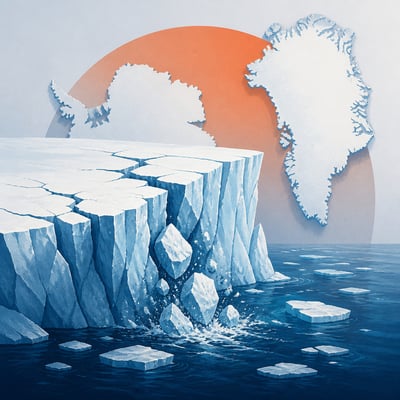
Antarctica is showing multiple signs of increasing ice-system stress, including unusually low winter sea ice, expanding surface melt and processes that may weaken ice shelves and accelerate glacier flow. Research indicates that ocean heat, meltwater and changing ice geometry can amplify ice loss, although the timing and scale of potential instability remain uncertain. The consequences include higher long-term sea-level rise risks, pressure on Antarctic ecosystems and greater exposure for coastal communities worldwide.
First Article: 01/01/00
Latest Article: 06/12/26
Summary
- The Bellingshausen Sea experienced an exceptional winter sea-ice shortfall of about 650,000 square kilometres, with possible consequences for penguins, seals and krill.
- Reduced sea-ice protection may expose ice shelves near Pine Island and Thwaites glaciers to greater breakup and could accelerate land-ice loss.
- Sub-ice channels can trap ocean heat and increase melting even where waters are only modestly warmer, challenging simplified ice-shelf projections.
- Climate models project substantially more Antarctic surface melt by 2100 under medium- and high-warming pathways, with greater risk of ice-shelf instability.
- Greenland ice-marginal lakes are associated with glacier speeds more than three times those of comparable land-terminating glaciers, adding another ice-loss feedback.
- Several proposed ice-sheet instabilities could amplify future sea-level rise, but some mechanisms—particularly marine ice-cliff instability—remain unobserved or contested.
History
The story is now framed more tightly around Antarctic ice-system stress, with clearer emphasis on a specific Bellingshausen Sea sea-ice deficit and on mechanisms that may amplify ice loss. It also narrows the uncertainty discussion by highlighting contested marine ice-cliff instability while strengthening links to ecosystem and coastal impacts.
The story has shifted from a broad assessment of Antarctic and Greenland ice-instability risks to a more concrete picture of current, observed changes: exceptional winter sea-ice loss, faster glacier flow, and localized ice-shelf melt processes are now emphasized alongside longer-term sea-level risk. It also broadens from pure ice-sheet instability to include immediate ecosystem impacts in polar regions.
Featured
Timeline: 155 Days
Hover over any logo to see coverage summary, click for full article.