
 Climate
 Privacy
 Bob Dylan
 Drones
 Data Centers
 AI Governance
 2026 Maine Senate Race
Greenland’s Warming Recasts Arctic Stakes
Coverage from Inside Climate News, The Invading Sea, and others
Articles
8
Active Days
139
The Topic
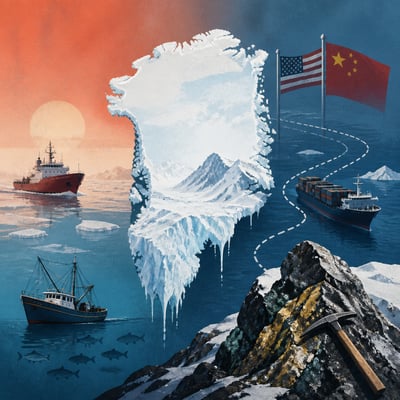
Rapid warming and ice loss are making Greenland more accessible while destabilizing the conditions that support its communities, fisheries, infrastructure, and research networks. The changes are increasing interest from the United States, Russia, China, and European states in Arctic routes, strategic positions, and mineral resources, while also intensifying pressure on Greenlandic sovereignty. At the same time, disrupted scientific cooperation and shifting fish stocks show that the effects of a warmer Arctic are both geopolitical and local.
First Article: 01/24/26
Latest Article: 06/11/26
Summary
- Retreating ice is increasing interest in Greenland’s shipping access, strategic location, and rare-earth resources.
- Greenland’s fisheries remain central to its economy and sovereignty debates, but warming seas are making catches and incomes less predictable.
- Ice loss may improve access to some areas while increasing risks from unstable permafrost, flooding, icebergs, melting glaciers, and difficult logistics.
- U.S. pressure over Greenland has strained cooperation between American and Greenlandic researchers and affected some fieldwork and student programs.
- Russia’s war in Ukraine and tensions involving the United States have weakened long-standing Arctic research networks and data exchanges.
- Changing fish distributions may create commercial gains for some species while increasing pressure on vulnerable stocks and coastal communities.
- Existing Arctic governance and cooperation mechanisms face greater strain as environmental change and strategic competition converge.
History
The story has broadened from climate-driven Arctic access and fisheries disruption into a more explicit sovereignty and resource competition narrative. Greenland’s strategic value now centers more clearly on shipping routes, minerals, infrastructure stress, and strained research cooperation.
The framing has shifted slightly from a broad Arctic warming story to a more explicit intersection of climate impacts with sovereignty and Arctic security concerns. The underlying substance is largely the same, but the current version sharpens the geopolitical angle and broadens the set of Arctic institutions and states involved.
Featured
Timeline: 139 Days
Hover over any logo to see coverage summary, click for full article.