
 Climate
 Privacy
 Bob Dylan
 Drones
 Data Centers
 AI Governance
 2026 Maine Senate Race
Last Update: 08/01/2026 at 4:33 PM EST
Arctic Underwater Noise And Shipping
Coverage from Inside Climate News, Phys.org, and others
Articles
4
Active Days
106
The Topic
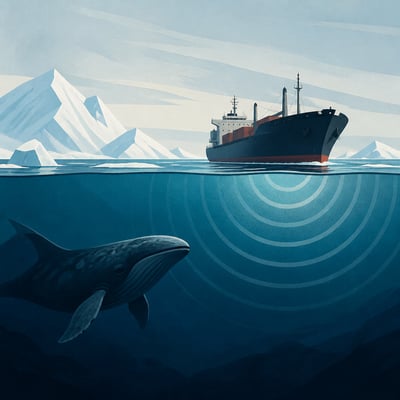
Arctic warming is opening waters to more vessel traffic and other human activity, raising underwater noise levels that interfere with marine life and increasing pressure for monitoring and shipping controls.
First Article: 02/02/26
Latest Article: 05/18/26
Summary
- Long-term Arctic acoustic monitoring shows underwater noise changing with season, ice cover, and activity levels.
- Shipping is a major source of new noise, with vessel traffic rising as sea ice retreats.
- Narwhals are a recurring concern because ship noise can mask echolocation, interrupt feeding, and alter movement.
- The evidence base is shifting from general concern to measured baselines built from decade-scale observations in Nunavut.
- Policy discussion is moving toward quieter ship design, slower speeds, and mandatory rules rather than voluntary guidance.
- The topic is coherent and fairly dense, with strong current signal around Arctic ocean noise and marine ecosystem impacts.
- The underlying issue looks ongoing and structural rather than short-lived, tied to changing ice conditions and expanding access.
History
This topic is new, but as new articles are added to it this area will summarize shifts, changes and expansions of the issues.
Featured
02-02-2026
Researchers, Indigenous hunters, and conservation groups say rising Arctic shipping noise is disrupting narwhal behavior across Canadian, Greenlandic and Svalbard waters in the 2020s.
02-24-2026
Researchers from Ocean Networks Canada measured underwater sound in Cambridge Bay, Nunavut, from 2015 to 2024 to assess Arctic noise impacts.
02-27-2026
Researchers quantify Arctic underwater noise from 2015 to 2024 in Iqaluktuuttiaq, Nunavut, while policy and infrastructure efforts address Arctic governance in Alaska and Lapland.
Timeline: 106 Days
Hover over any logo to see coverage summary, click for full article.
Additional Articles
⭐⭐⭐
In Churchill, Manitoba, researchers and community partners use GENICE mesocosms and DNA and RNA sampling to study Arctic microbial response to simulated diesel spills amid rising shipping access.