
 Climate
 Privacy
 Bob Dylan
 Drones
 Data Centers
 AI Governance
 2026 Maine Senate Race
Arctic Thaw Damages Cultural Archives
Coverage from EurekAlert!, 404 Media, and others
Articles
4
Active Days
38
The Topic
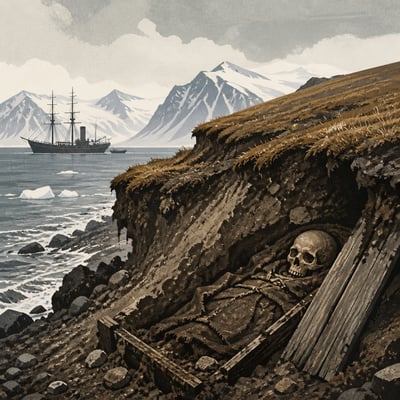
Accelerating Arctic warming, permafrost thaw, and coastal erosion are damaging archaeological sites that preserve evidence of past human lives. At Likneset in Svalbard, graves, textiles, and burial structures have deteriorated across successive excavations, while research in Greenland has found diverse microbial communities and antimicrobial-resistance genes preserved in ancient middens. The findings increase pressure to adapt Arctic heritage management and to assess what thawing material could release into surrounding environments.
First Article: 05/20/26
Latest Article: 06/26/26
Summary
- Likneset, a 17th-century whaling burial site in Svalbard, has suffered increased coastal erosion and structural damage since earlier excavations.
- Textiles at Likneset deteriorated sharply over time, while some graves collapsed or were classified as completely destroyed.
- Skeletal remains preserve evidence of strenuous work, malnutrition, scurvy, trauma, and other health stresses among early whalers.
- Greenland middens contain distinct microbial communities shaped by successive human cultures, including bacteria linked to foodborne illness and resistance to 17 antimicrobial classes.
- Coastal erosion and thaw may mobilize ancient midden material into waterways, although the scale and speed of any resulting biological effects remain uncertain.
- Researchers argue that Arctic heritage planning and preservation practices need to account for faster environmental degradation.
History
The main update is a stronger warning signal: the Greenland research now explicitly identifies antimicrobial-resistance genes alongside preserved microbes, raising the potential downstream environmental impact of thawing material. The framing also shifts toward faster degradation and a broader need to adapt heritage planning and monitoring.
The story broadens from a single threatened Svalbard burial site into a wider Arctic heritage and environmental-risk story. It now adds Greenland midden research and shifts the emphasis toward managing thawed biological materials and uncertain public-health implications, not just irreversible heritage loss.
Featured
Timeline: 38 Days
Hover over any logo to see coverage summary, click for full article.