Last Update: 08/01/2026 at 1:00 PM EST

Extreme Heat Strains India’s Workers

Coverage from The Guardian, Inside Climate News, and others

Articles

52

Active Days

162

The Topic

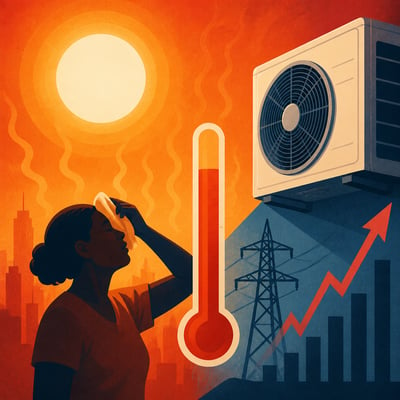
Extreme Heat Strains India’s Workers topic image

More frequent and severe heat is exposing major vulnerabilities across India and South Asia, with outdoor and informal workers facing illness, lost wages, dehydration and potentially longer-term kidney and cardiovascular risks. Heatwaves are also straining hospitals, electricity supplies, water access and urban infrastructure, particularly in densely populated and lower-income communities. The evidence points to practical adaptation needs including shade, rest, drinking water, heat alerts, cooling facilities and stronger workplace protections, while expanded cooling can increase electricity demand if not paired with lower-emissions power.

First Article: 02/16/26

Latest Article: 07/27/26

Summary

  • Outdoor and informal workers face reduced productivity, missed work and income losses during prolonged heat.
  • Repeated dehydration and heat exposure are associated with kidney injury and may increase longer-term cardiovascular risks, although some causal evidence remains under study.
  • Karachi’s heatwave impacts were amplified by electricity outages, water shortages and limited public cooling infrastructure.
  • India’s large heat-exposed workforce has limited access to air conditioning, shade, rest areas, sanitation and medical support.
  • Heatwaves are increasing pressure on electricity systems, with cooling demand linked in one report to higher coal use during a supply-constrained period.
  • Researchers and public-health experts emphasize heat action plans, drinking water, scheduled breaks, shade, cooling centres and occupational protections.

History

07/24/2026

The story broadens from worker heat harms to a wider systems strain: heat is now framed as stressing hospitals, electricity, water access and urban infrastructure as well as livelihoods. The update also adds a sharper adaptation focus on practical protections and lower-emissions cooling.

07/23/2026

The story now places much greater emphasis on worker livelihoods and concrete vulnerability factors, while expanding beyond India to include Pakistan’s Karachi heat impacts. It also more explicitly frames cooling as a tradeoff with electricity demand and emissions.

Full History

Featured

Timeline: 162 Days

Feb 16Mar 16Apr 13May 25Jun 22Jul 20

Additional Articles

⭐⭐⭐⭐⭐

Yale Climate Connections / Sanket Jain07-01-2026
Outdoor workers face greater dehydration and health risks as extreme heat events rise, affecting kidney function and productivity in India, Guatemala, and North Carolina.
Yale Climate Connections / Sanket Jain07-21-2026
In studies across India, the United States, China, Germany, Sweden, and Portugal, repeated extreme heat exposure correlated with inflammation biomarkers tied to cardiovascular risk.
Mongabay / Md Jahidul Islam07-21-2026
A PCI study and a 2025 World Bank heat report link rising temperatures in Dhaka, Bangladesh, to health problems and major productivity losses for informal workers.
Earth.Org / Martina Igini05-15-2026
World Weather Attribution researchers reported a late-April South Asia heatwave became about three times more likely due to human-caused warming, with deaths in India and Karachi in May.
Climate Home News / Megan Rowling07-21-2026
IIED estimated extreme heat costs India about 2% of GDP per year in lost wages and health impacts among informal migrant workers, based on surveys in Ajmer, Delhi, and Agra.
Al Jazeera / Usaid Siddiqui05-08-2026
Meteorological agencies and scientists report a deadly South Asia heatwave in India, Pakistan, and Bangladesh during April 2024, intensified by climate-linked extreme heat and El Nino-like patterns.
Al Jazeera06-23-2026
India prepares water conservation and crop-risk responses as weak southwest monsoon rainfall continues through early July, amid El Nino warnings.
Euronews06-10-2026
Frontiers in Environmental Health researchers estimate Indian heatwaves cause about 3,400 excess deaths per extreme day and nearly 30,000 per five-day event.
The Conversation05-29-2026
World Weather Attribution assessed an April 15-29, 2026 pre-monsoon heatwave in India and Pakistan as about three times more likely and about 1 C hotter due to climate change.
Sentient / Melina Walling07-20-2026
US dairy cows in 2007-2016 data show declining milk fat and protein as heat and humidity rise, increasing farm adaptation and labor risks.
Carbon Brief / Solomon Elusoji05-29-2026
During a May heatwave, the UK, France, Portugal, and Italy reported record temperatures and deaths, while India’s heatwave fatalities and power cuts were linked to extreme heat and high electricity demand.

ETV Bharat07-27-2026
Bhupender Yadav told the Lok Sabha on July 27, 2026 that India’s assessments identify 109 districts as very high climate-risk zones and project major agricultural declines by 2080.
Kuwait Times06-02-2026
In Delhi and Punjab, dairy farmers respond to extreme heat that reduces cattle milk yield and fertility through cooling investments, heat-tolerant breeding, and parametric livestock insurance.
The Times of India / Kushagra Dixit03-16-2026
Delhi and other Indian regions faced record heat in March 2025 with temperatures reaching 40 C.

Fortune / Catherina Gioino06-30-2026
R. Jisung Park links record European heat to higher workplace injury risk, reduced student outcomes, and slower GDP growth, emphasizing adaptation and cooling infrastructure.
NDTV07-09-2026
Government and Ministry of Earth Sciences materials connect India’s rising very heavy rainfall and cyclone intensity risk to warming and tropical Indian Ocean heat over recent decades.
Deutsche Welle07-06-2026
France and the United States faced heat-driven grid stress as extreme heat increased demand for cooling and reduced generation and transmission reliability, raising blackout risk and electricity prices.
Economic Times03-16-2026
Meteorologists report unusual March heat in India during 2025, including Delhi, Mumbai, and Ahmedabad.
Climatemint / Bibek Bhattacharya04-30-2026
India experiences severe heatwaves, with developing El Niño and declining Himalayan snowpack raising risks to monsoon rainfall, water supplies, and agriculture during May-June.
Climatemint / Bibek Bhattacharya05-28-2026
A 2020 India Meteorological Department analysis links rising heatwave frequency, duration, humidity, and nighttime temperatures in India to escalating health, labor, and electricity-demand risks.
Green Central Banking / Emma Thomasson02-16-2026
University of Oxford researchers project rising extreme heat exposure for 41% of people by 2050, driving cooling energy demand and economic risks across India, Nigeria and other developing countries.
Climate Analytics06-15-2026
In India, Pakistan, and Bangladesh, extreme heatwaves have increased cooling electricity demand and blackouts, while fossil generation and grid constraints limit reliable decarbonization and resilience.
India Today02-28-2026
India experiences record heat and rising risk from 2024 to 2026 across urban and rural regions.
Climatemint / Sayantan Bera07-09-2026
El Nino and monsoon rainfall variability in India intensify drought impacts and increase power-system and health risks through reduced hydropower and higher cooling demand.
The Equation07-13-2026
Severe 2026 thunderstorms and tornadoes across the US Midwest caused major outages, and climate projections point to increasing electricity grid reliability risks.

⭐⭐⭐

Carbon Brief / Simon Evans07-10-2026
Carbon Brief DeBriefed reported hottest-on-record heat in Western Europe and deadly floods in China during 2020s climate risk discussions, alongside governance and electrification updates.
Inside Climate News / Amy Green07-24-2026
OSHA is progressing toward a national workplace heat standard after Florida cited insufficient water, rest, and shade in a heat death and reported 1,042 heat worker deaths since 1992.
AP News06-18-2026
Surat textile factory workers in India report worsening heat stress, citing limited cooling options and incomplete worker protections during long shifts amid rising climate-driven temperatures.
UN India05-28-2026
UNFCCC chief Simon Stiell warned extreme heat in northern and central India is intensifying with climate change as electricity demand hits record levels.
Mercury News / RAJESH KUMAR SINGH07-16-2026
Banda in Uttar Pradesh, India, faced persistent extreme heat during 2023-2024, with district officials expanding cooling centers and rehydration support amid rising heat-related illness.
MIT News06-08-2026
MIT Climate Project seed grants funded four Critical Cooling prototypes after heat-stress encounters in New Delhi, targeting energy-efficient, refrigerant-safe cooling for India and the Global South.
Yale Climate Connections05-05-2026
Scientists connect India heat wave escalation to human-caused warming and note renewable solar plus storage and grid upgrades to improve cooling reliability during outages.
Al Jazeera / Vidya Krishnan05-22-2026
India experienced extreme heat in late April, with 46.9C in Akola and criticized data and governance on heat deaths and protection.
The Times of India / Priyanshi Rastogi06-02-2026
In India, heatwaves above 45 C are driving city heat action measures such as cool roofs, shaded relief centers, and evaporative cooling gear for outdoor workers.
Word In Black07-02-2026
Extreme heat deaths in Missouri and Texas have been linked to electricity shutoffs and lack of air conditioning affecting vulnerable outdoor workers and communities.
Penn Today / Greg Johnson07-20-2026
R. Jisung Park links extreme heat to higher workplace injuries, lower productivity, and reduced New York City student pass rates using millions of test scores.
Jezebel / Jim Vorel06-20-2026
Reported deaths during a Northern California heat warning show how extreme heat becomes fatal when air conditioning and cooling access fail.
Earth Island Journal06-02-2026
June 2021 Pacific Northwest heat dome in British Columbia caused record temperatures, more than 600 deaths, and health risks tied to ozone formation and overheating.
Phys.org / Sam Charles06-25-2026
University of Waterloo researchers and Southwestern Public Health released a Health Equity extreme-heat policy guide for Canada and southwestern Ontario on June 25, 2026.
Yahoo07-17-2026
During the 2026 European heat-wave period, France nuclear output curtailments were linked to warmer cooling-water and thermal discharge limits.
Yahoo07-17-2026
During heat waves in France and Europe, power plants curtail generation as warming waters and drought reduce cooling performance and hydropower output while electricity demand peaks.
BGR / Aaron Greenbaum07-05-2026
Solar PV efficiency drops during heatwaves, reducing electricity supply for air conditioning when cooling demand is highest.
ClimateMint / Bibek Bhattacharya07-23-2026
Climate Central and Adelphi Global reporting links India extreme heat to climate-attributable sleep loss and rising health and labor impacts.
Climatemint / Sayantan Bera06-11-2026
On 4 June, Kerala saw delayed southwest monsoon landfall as El Nino signals indicate possible rainfall deficits, elevating kharif crop and price risks in India.
Covering Climate Now06-30-2026
International Labour Organization data indicate extreme heat exposure endangers outdoor workers worldwide, while many US states lack enforceable occupational heat standards.
The Guardian06-22-2026
India implemented multi-week school closures for heatwaves in Delhi and many states, disrupting employment and childcare and increasing women’s burdens.
Freyr Energy05-22-2026
Heatwaves across Delhi, Jaipur, Nagpur, and Ahmedabad increase summer electricity demand while extreme heat reduces rooftop solar PV efficiency and stresses inverters and batteries.
SpringerLink / Jun Li and Chao Feng07-25-2026
Jun Li and Chao Feng study Chinese prefecture-level cities, finding extreme high temperatures reduce high-quality economic development through talent loss and reduced green technology investment.
Nytimes Wirecutter06-30-2026
In the United States, a cooling guide recommends air conditioners, fans, hydration, air purifiers, and backup power to reduce extreme-heat health and outage risks.