
 Climate
 Privacy
 Bob Dylan
 Drones
 Data Centers
 AI Governance
 2026 Maine Senate Race
Fossil Fuel Messaging Shapes Climate Debate
Coverage from Grist, DeSmog, and others
Articles
9
Active Days
151
The Topic
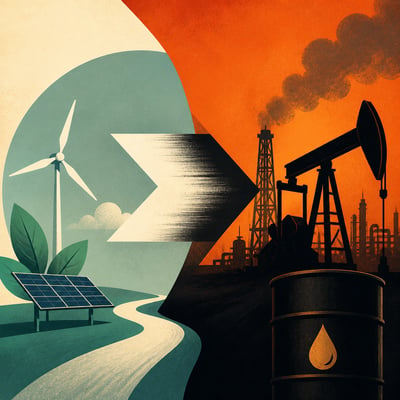
The topic centers on how fossil fuel companies and allied organizations have used advertising, public relations, research funding, and policy engagement to present oil and gas as necessary, cleaner than alternatives, or compatible with climate action. Recent analyses describe a shift from prominent transition pledges toward energy-security, economic-resilience, and technology-focused messaging, while historical investigations trace similar efforts around natural gas, methane, and industry-supported research. The material matters because these narratives can affect public understanding, policymaking, investment, and the perceived need for direct reductions in fossil fuel use.
First Article: 02/28/26
Latest Article: 07/28/26
Summary
- Major oil companies increasingly frame fossil fuels as essential to energy security, economic stability, and continued energy demand.
- Research on corporate communications finds renewables are often presented as dependent on natural gas or as limited by cost and intermittency.
- Investigations trace decades of natural-gas promotion despite internal awareness of methane emissions and uncertainty over leakage rates.
- Corporate funding has supported university research and climate solutions such as carbon capture that can reduce emphasis on rapidly cutting fossil fuel use.
- The messaging increasingly promotes LNG, carbon capture, blue hydrogen, biofuels, and renewable diesel as ways to retain a role for fossil fuel companies.
- The evidence base combines archival documents, communications analysis, academic research, and advocacy reports, with differing interpretations of corporate intent and research independence.
History
The story is reframed more broadly around coordinated fossil-fuel communications and research strategies, rather than mainly a shift in messaging. It now adds new institutional actors and a stronger emphasis on the evidence base and debate over research independence.
The story broadens from corporate climate messaging to include how fossil fuel firms have also shaped research agendas and policy debates, with a deeper historical arc running from the 1960s to today. The new version also sharpens the claim that natural gas and climate-tech narratives were used to defend continued oil and gas use, not just to soften public messaging.
Featured
Timeline: 151 Days
Hover over any logo to see coverage summary, click for full article.