
 Climate
 Privacy
 Bob Dylan
 Drones
 Data Centers
 AI Governance
 2026 Maine Senate Race
Electrochemical Carbon Capture Advances
Coverage from MIT News, Times Tribune News, and others
Articles
8
Active Days
355
The Topic
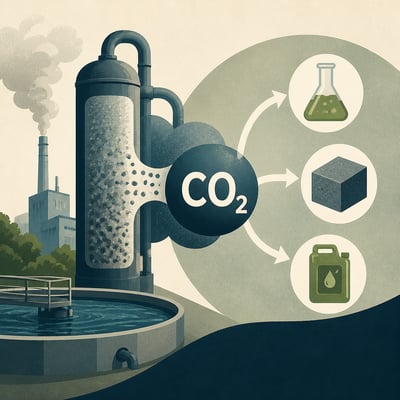
Recent work is pushing electrochemical carbon capture toward lower-energy operation, better reactor stability, and new use cases such as direct ocean capture, wastewater removal, and CO2-to-formic-acid conversion. The strongest signal is engineering progress on efficiency and durability rather than deployment at scale.
First Article: 07/23/25
Latest Article: 07/12/26
Summary
- Most of the signal is technical: researchers are reducing energy demand and improving stability in electrochemical carbon capture systems.
- Several approaches target different carbon streams, including seawater, wastewater, ambient air, and exhaust gas.
- Reactor design and materials choices matter heavily, especially membrane configuration, electrode spacing, and corrosion-resistant components.
- Electrochemically mediated sorbents and hydrogen-looping systems both aim to lower the energy penalty compared with conventional amine-based capture.
- One line of work pairs capture with conversion, turning CO2 into formic acid instead of only storing or separating it.
- The topic is still mostly at the lab and prototype stage, with performance claims supported by controlled experiments rather than large-scale deployment.
- Uncertainty remains around long-term durability, degradation, and whether the systems can scale efficiently outside test conditions.
History
The story has broadened from wastewater-focused carbon removal and CO2-to-formic-acid conversion into a wider electrochemical capture platform spanning seawater, ambient air, and exhaust gas. The main update is a stronger emphasis on engineering improvements—lower energy use, reactor stability, and durability—rather than any move toward deployment.
Featured
Timeline: 355 Days
Hover over any logo to see coverage summary, click for full article.