
 Climate
 Privacy
 Bob Dylan
 Drones
 Data Centers
 AI Governance
 2026 Maine Senate Race
China Balances Clean Energy and Coal
Coverage from Carbon Brief, Reuters, and others
Articles
11
Active Days
126
The Topic
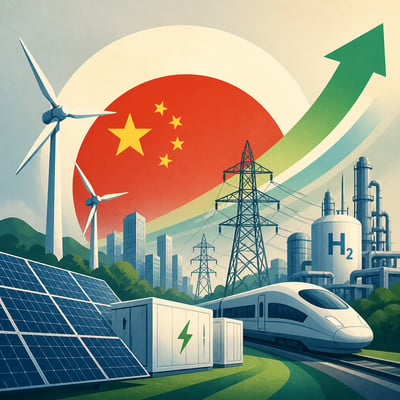
China’s 15th Five-Year Plan sets a direction of rapid expansion in wind, solar, storage, electrification, hydrogen and grid infrastructure while preserving coal’s role in energy security and industrial production. National and provincial plans align around clean-energy growth, but they provide limited binding constraints on absolute emissions, coal use or fossil-fuel capacity. The central tension is whether clean-power deployment and system flexibility can grow quickly enough to meet rising electricity demand and reduce fossil generation.
First Article: 03/06/26
Latest Article: 07/09/26
Summary
- China’s 2026–2030 plans target higher non-fossil electricity generation and more than half of installed capacity from wind and solar by 2030.
- Storage, distributed renewables, vehicle-to-grid systems, virtual power plants and transmission upgrades are intended to improve renewable-power integration.
- Coal is expected to remain near high production levels and may gain additional use as a feedstock for chemicals and liquid fuels.
- The plans emphasize carbon-intensity and clean-energy shares but do not establish a clear national cap or phase-down schedule for absolute emissions or coal use.
- All 31 provincial-level jurisdictions reportedly pledge to peak emissions before 2030, while many also plan additional fossil-fuel production.
- Hydrogen, green fuels, electric vehicles and fusion research are being advanced as industrial and technological priorities, with hydrogen receiving the strongest near-term policy emphasis.
- Extreme heat, floods and rapidly rising electricity demand are increasing pressure on grid resilience and system flexibility.
History
The story has shifted from a broad clean-energy planning picture to a more execution-focused one: the new version emphasizes implementation through provincial plans and system flexibility constraints, while making coal’s continued security role and weak absolute-emissions limits more explicit. It also adds stronger emphasis on rising demand and grid resilience as the main bottlenecks.
The story has shifted from a broad clean-energy and climate plan to a more specific emphasis on grid flexibility, coal’s continued role, and supply-chain control. The latest version also adds clearer political and provincial involvement, making the transition agenda look more operational and system-level.
Featured
Timeline: 126 Days
Hover over any logo to see coverage summary, click for full article.