
 Climate
 Privacy
 Bob Dylan
 Drones
 Data Centers
 AI Governance
 2026 Maine Senate Race
Climate Extremes Test Energy Choices
Coverage from Carbon Brief and others
Articles
8
Active Days
148
The Topic
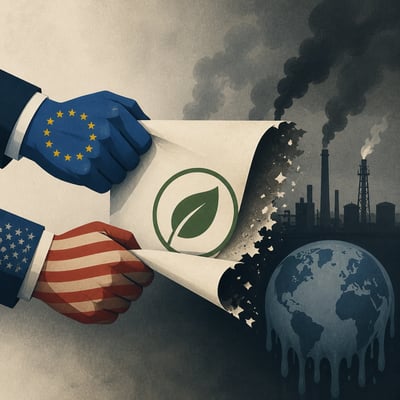
The material shows climate impacts becoming more consequential while governments pursue sharply different responses. Extreme heat, wildfires, floods and ecosystem risks are documented alongside US rollbacks of climate rules and research, European efforts to maintain emissions reductions and energy security, and continued growth—but changing conditions—for renewables and electric vehicles. The central tension is between accelerating climate risks and an uneven policy response shaped by energy security, domestic politics and implementation constraints.
First Article: 02/20/26
Latest Article: 07/17/26
Summary
- Extreme heat, wildfires, floods and climate-linked deaths are affecting communities across Europe, North America, South America, Africa and Asia.
- The US administration is rolling back or weakening climate regulations, clean-energy support, climate research capacity and environmental protections.
- European institutions and governments are combining emissions-reduction measures with energy-price relief and fossil-fuel concessions, creating policy tension.
- China remains a major clean-energy and solar manufacturer, but domestic solar additions are slowing as policy support and grid-integration arrangements change.
- Attribution studies are linking specific heat and wildfire events to human-caused climate change, while adaptation efforts are often described as fragmented or insufficient.
- Amazon deforestation has declined in some reporting periods, but research continues to identify warming and forest loss as risks to regional ecosystem stability.
- Energy security is increasingly shaping climate and energy decisions, influencing investment, fossil-fuel approvals and support for renewables.
History
The story now emphasizes that climate harms are spreading more broadly and becoming more consequential, while policy responses remain uneven and increasingly shaped by energy security and adaptation limits. The framing also sharpens around continued renewable growth and EV uptake, but under changing policy and infrastructure conditions rather than straightforward momentum.
The story has shifted from broad policy friction to a more concrete picture of diverging national responses: the Trump administration is actively dismantling US climate and clean-energy policy, while the EU, UK and China are still moving forward but with clear funding, grid and political constraints. At the same time, climate impacts are now foregrounded more sharply through heat deaths, wildfire displacement and attribution findings.
Featured
Timeline: 148 Days
Hover over any logo to see coverage summary, click for full article.