
Last Update: 08/01/2026 at 2:00 PM EST

China Balances Clean Energy and Coal

Coverage from Carbon Brief, Reuters, and others

Articles

11

Active Days

126

The Topic
China Balances Clean Energy and Coal topic image

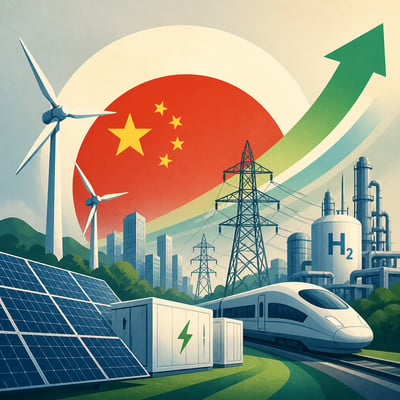
China’s 15th Five-Year Plan sets a direction of rapid expansion in wind, solar, storage, electrification, hydrogen and grid infrastructure while preserving coal’s role in energy security and industrial production. National and provincial plans align around clean-energy growth, but they provide limited binding constraints on absolute emissions, coal use or fossil-fuel capacity. The central tension is whether clean-power deployment and system flexibility can grow quickly enough to meet rising electricity demand and reduce fossil generation.

First Article: 03/06/26

Latest Article: 07/09/26

History

07/22/20262 new articles

The story has shifted from a broad clean-energy planning picture to a more execution-focused one: the new version emphasizes implementation through provincial plans and system flexibility constraints, while making coal’s continued security role and weak absolute-emissions limits more explicit. It also adds stronger emphasis on rising demand and grid resilience as the main bottlenecks.

07/01/20264 new articles

The story has shifted from a broad clean-energy and climate plan to a more specific emphasis on grid flexibility, coal’s continued role, and supply-chain control. The latest version also adds clearer political and provincial involvement, making the transition agenda look more operational and system-level.

05/22/20260 new articles

The story is now framed more explicitly as China’s 2026-2030 planning cycle, with added emphasis on legal structure and international climate positioning alongside the clean-energy buildout. The core trajectory is still continuity: rapid expansion of clean power and infrastructure without a binding absolute emissions cap.

05/11/2026Topic Formed

China is advancing a state-led climate and energy strategy that combines rapid clean-power expansion, grid and storage buildout, hydrogen and frontier technology support, industrial decarbonization, and stronger adaptation planning. The clearest pattern is long-horizon planning with energy security as a core frame, while binding absolute emissions limits remain limited or absent.