
 Climate
 Privacy
 Bob Dylan
 Drones
 Data Centers
 AI Governance
 2026 Maine Senate Race
Climate Crisis as Health Emergency
Coverage from The Guardian, Nature, and others
Articles
19
Active Days
735
The Topic
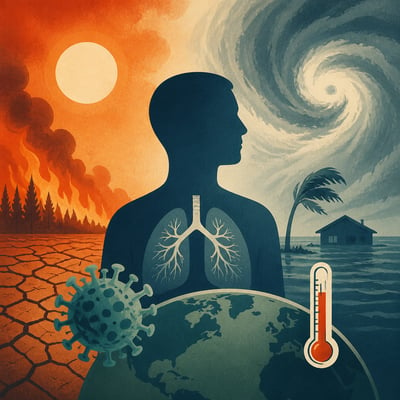
Health experts and researchers are intensifying calls to treat climate change as a global public health emergency. A WHO-convened European commission has recommended a formal emergency designation, while scientific reviews describe shifting risks from heat, extreme weather, waterborne and vector-borne diseases, air pollution, food insecurity, and disrupted health systems. The discussion is increasingly focused on coordinated preparedness, resilient infrastructure, disease surveillance, and protecting children and other vulnerable groups.
First Article: 07/24/24
Latest Article: 07/28/26
Summary
- A WHO-convened pan-European commission recommended classifying climate change as a public health emergency of international concern.
- Research indicates climate change is altering the distribution, timing, and predictability of vector-borne, waterborne, and respiratory diseases.
- Floods, hurricanes, droughts, wildfires, and heat can damage water, sanitation, and healthcare systems while increasing exposure and transmission risks.
- The proposed response includes climate-health assessments, stronger surveillance, resilient infrastructure, vaccination, and better preparation of hospitals for climate shocks.
- Children face particular risks to nutrition, learning, physical health, and mental health from climate-related disruption.
- The commission links fossil fuel subsidies and continued fossil fuel use to preventable health harms, especially through air pollution and climate impacts.
History
The story has shifted from a broad call for WHO emergency action to a more specific emphasis on disease surveillance and climate-resilient health systems. It also adds clearer focus on waterborne disease and the harms climate disruption poses to children.
The story has shifted from a general WHO-linked push to treat climate change as a health emergency into a more concrete WHO-convened commission recommendation ahead of the World Health Assembly. It also broadens the health rationale by emphasizing infectious-disease dynamics, non-communicable disease risks, and the healthcare sector’s own emissions burden.
Featured
Timeline: 735 Days
Hover over any logo to see coverage summary, click for full article.