
 Climate
 Privacy
 Bob Dylan
 Drones
 Data Centers
 AI Governance
 2026 Maine Senate Race
Climate Migration as Adaptation
Coverage from Carbon Brief, SpringerLink, and others
Articles
13
Active Days
207
The Topic
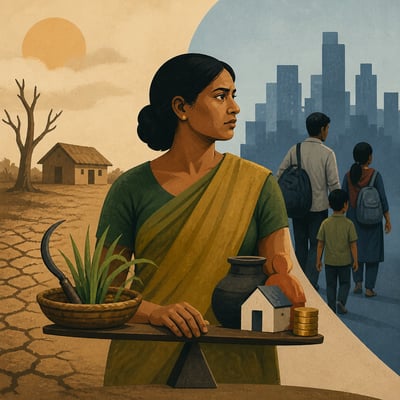
Climate-related migration is increasingly being examined as a possible adaptation response rather than solely as evidence of climate failure or crisis. Movement decisions are usually shaped by climate hazards alongside livelihoods, assets, conflict, health, gender, and access to services, while many people move within national borders or cannot move at all. The material also highlights risks in planned relocation and persistent gaps in definitions, governance, funding, equity, and community participation.
First Article: 01/01/26
Latest Article: 07/26/26
Summary
- Most climate-related mobility occurs within national borders and commonly connects rural areas with cities or other domestic destinations.
- Climate hazards interact with livelihoods, assets, inequality, conflict, and health rather than acting as a single cause of migration.
- Migration can diversify household income and reduce risk, but it can also weaken rural resilience, impose costs, or leave vulnerable people trapped.
- Planned relocation is more likely to succeed when it protects livelihoods, builds trust, and involves affected communities in decisions.
- Women often carry increased care, farming, and resource-collection responsibilities while retaining limited control over land, finances, and leadership.
- Research and policy remain fragmented around terms such as climate migrant and climate refugee, coordinated governance, and locally funded adaptation.
History
The framing has broadened from climate mobility as a mixed migration/adaptation issue to a more explicit adaptation and governance agenda, with stronger emphasis on who is left trapped and on unresolved policy design. The updated version also elevates planning, participation, funding, and legal pathways as central gaps.
The story has broadened from climate-migration and health impacts into a more explicit framework about mobility as a spectrum of adaptation, immobility, displacement, and relocation. The new emphasis is on how resource constraints, gender inequality, and weak planning determine whether movement reduces risk or deepens harm.
Featured
Timeline: 207 Days
Hover over any logo to see coverage summary, click for full article.