
 Climate
 Privacy
 Bob Dylan
 Drones
 Data Centers
 AI Governance
 2026 Maine Senate Race
Climate Extremes Drive New Risk Assessments
Coverage from Inside Climate News, Carbon Brief, and others
Articles
50
Active Days
353
The Topic
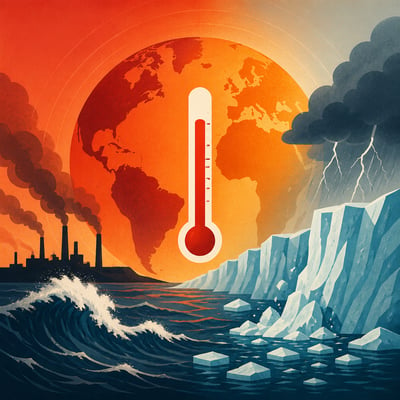
Climate research and reporting increasingly connect human-caused warming with more frequent, intense and overlapping hazards, including heatwaves, heavy rainfall, wildfire weather, coastal flooding and marine heatwaves. Attribution science is expanding from assessing individual events to evaluating compound and cascading impacts, while researchers emphasize better models, shared standards and longer observation records. The same evidence base is under pressure from proposed cuts or changes to research funding and ocean-monitoring systems, complicating preparedness and climate-risk management.
First Article: 01/01/00
Latest Article: 07/24/26
Summary
- Attribution science is shifting toward compound, cascading and successive extremes rather than isolated events.
- Human influence is assessed with high confidence for extreme heat, heavy precipitation, compound hot-and-dry conditions, tropical storm intensity and wildfire weather.
- Sea-level rise has substantially increased the frequency of extreme coastal flooding, while heat and marine extremes are affecting cities, ecosystems, health and food systems.
- Long-term ocean observations, including systems used to monitor the Atlantic Meridional Overturning Circulation, face funding and institutional pressures.
- Localized hazards such as severe thunderstorms and hail remain harder to attribute because models and observations are limited.
- Forecast-based and rapid attribution tools are emerging as inputs to disaster planning, recovery and climate-loss assessment.
- Climate risks are increasingly intersecting with governance decisions involving disaster response, research funding, conservation and liability.
History
The story now adds a governance and funding-pressure dimension: climate attribution is no longer just about improving science, but also about preserving the monitoring and institutional systems needed to use it. It also places more emphasis on emerging rapid/forecast-based attribution tools and their role in planning, recovery, and loss assessment.
The framing has shifted from broad climate-hazard attribution to a more explicit emphasis on overlapping compound impacts and the limits of reliably modeling some local extremes. The current version also adds stronger focus on marine heatwaves and on the monitoring and institutional pressures facing observation systems.
Featured
Timeline: 353 Days
Hover over any logo to see coverage summary, click for full article.