
 Climate
 Privacy
 Bob Dylan
 Drones
 Data Centers
 AI Governance
 2026 Maine Senate Race
Coral Reefs And Carbon Cycling
Coverage from Phys, SciTechDaily, and others
Articles
6
Active Days
238
The Topic
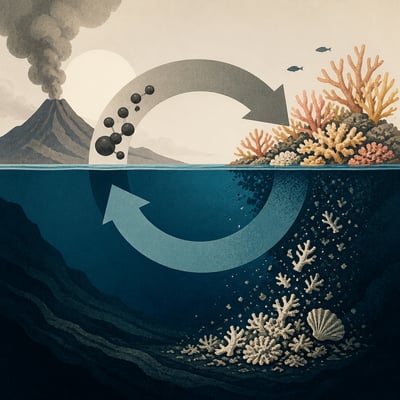
Recent research links coral reef expansion and collapse to long-term carbon burial patterns that change how quickly Earth recovers from major CO2 shocks. The dominant signal is a deep-time climate science finding, with modern reef loss framed as a possible shift in carbon-cycle behavior.
First Article: 12/01/25
Latest Article: 07/26/26
Summary
- Multiple pieces point to the same finding: reef extent helps determine whether carbon is buried in shallow waters or shifted to the deep ocean.
- The main development is a deep-time reconstruction of carbon-cycle behavior across roughly 250 million years using geological and climate models.
- Reef expansion tends to slow climate recovery after CO2 injections by limiting deep-ocean exchange, while reef collapse tends to speed recovery.
- Modern reef decline from warming and acidification is a recurring concern, but its net effect on future carbon cycling remains uncertain.
- The topic is scientifically coherent and tightly focused, with little evidence of fragmentation beyond differences in phrasing and emphasis.
- This is a structural climate-science theme rather than a short-lived event, because it concerns Earth-system feedbacks operating over geologic time.
History
The story is largely stable, but the framing has tightened around a deeper reconstruction of carbon-cycle behavior and a clearer statement that reef state may alter climate recovery timing. The new version also adds PNAS as the publication venue, reinforcing the scientific footing without changing the core thesis.
Featured
Timeline: 238 Days
Hover over any logo to see coverage summary, click for full article.