
 Climate
 Privacy
 Bob Dylan
 Drones
 Data Centers
 AI Governance
 2026 Maine Senate Race
Climate Stress Reshapes Coral Reef Networks
Coverage from The Conversation, DeeperBlue.com, and others
Articles
4
Active Days
91
The Topic
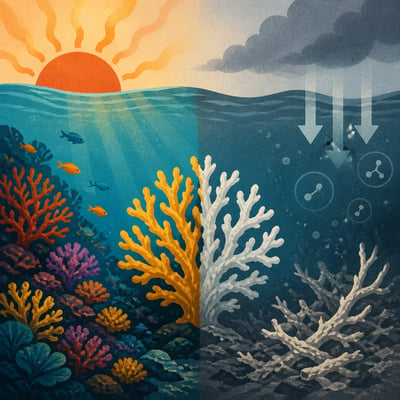
Research across Pacific reef systems shows that climate-related ocean changes are reshaping coral communities, weakening biodiversity and altering the connections that help damaged reefs recover. Acidification favors hardier corals and algae over complex reef-building species, while models indicate that including pH and oxygen produces substantially greater projected impacts on cold-water coral ranges. The findings support managing marine protected areas as connected networks that include both shallow and deep-seafloor habitats.
First Article: 02/02/26
Latest Article: 05/03/26
Summary
- A small number of Coral Sea and Pacific reefs function as larval hubs linking otherwise separated reef systems.
- Lord Howe Island may provide a climate refuge for corals, but its isolation limits natural replenishment.
- Rising acidity produces a gradual loss of branching, soft and juvenile corals rather than a clearly defined collapse threshold.
- Deep-water corals in the Galápagos have responded to past climate-driven ocean circulation and oxygen changes, indicating vulnerability below shallow reefs.
- Models that include pH and dissolved oxygen project 11.5% to 21.4% greater climate impacts on cold-water corals than warming-only models.
- Marine protection may be more effective when it safeguards ecological corridors, deep habitats and connected reef networks rather than isolated sites.
History
The story shifts from a broad reef-connectivity warning to a more specific Pacific framing that quantifies impacts and emphasizes management of connected shallow-and-deep reef networks. The biggest new point is that adding pH and oxygen to models materially increases projected cold-water coral impacts.
The story now puts much more emphasis on specific reef-network nodes and refugia that shape recovery, rather than just broad stressor interactions. It also extends the evidence base more explicitly from shallow reefs to deep-water and cold-water corals, strengthening the case for connectivity-based protection across multiple habitats.
Featured
Timeline: 91 Days
Hover over any logo to see coverage summary, click for full article.