
 Climate
 Privacy
 Bob Dylan
 Drones
 Data Centers
 AI Governance
 2026 Maine Senate Race
Corporate Buyers Push Firm Clean Power
Coverage from Utility Dive, Corporate Energy Buyers Association, and others
Articles
11
Active Days
99
The Topic
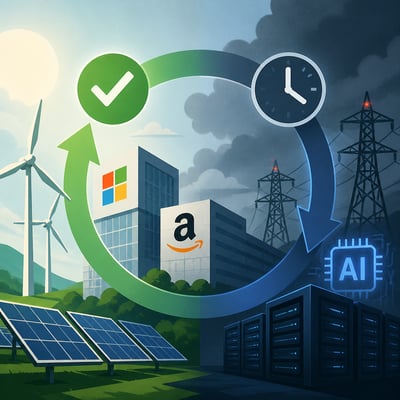
Large corporate electricity buyers are seeking cleaner and more continuous power as data-center and AI demand increases. Utilities and regulators are developing tariffs and bilateral arrangements that let participating customers support nuclear, geothermal, storage, renewables and other clean firm resources while limiting costs for non-participating ratepayers. At the same time, proposed changes to Scope 2 accounting are creating disagreement over whether companies should match clean electricity by hour and location or prioritize projects with the greatest emissions impact.
First Article: 02/20/26
Latest Article: 05/29/26
Summary
- Large commercial customers are using utility tariffs and bilateral agreements to support new clean and clean firm resources.
- Data-center and AI electricity demand is increasing pressure for power that is available beyond periods of high wind or solar output.
- Nuclear, advanced geothermal, hydropower and long-duration storage are gaining a larger role in corporate procurement alongside solar and wind.
- Clean energy tariffs are designed to assign project-related costs to participating customers and provide longer-term revenue certainty.
- Corporate clean-energy deal volume remains substantial, but buyer announcements have declined and PPA prices face pressure from grid constraints, policy uncertainty and geopolitical conditions.
- The Greenhouse Gas Protocol is considering more granular Scope 2 accounting, dividing technology companies and other stakeholders.
- Microsoft’s reported review of its hourly clean-power goal illustrates the tension between ambitious accounting standards and rapidly rising data-center demand.
History
The story now emphasizes utilities and regulators actively structuring tariffs and bilateral deals to support clean firm power for large customers, while corporate procurement appears more constrained as buyer announcements slow and PPA pricing weakens. It also more explicitly frames Microsoft’s hourly clean-power goal review as evidence of strain from rising data-center demand.
The story now extends beyond corporate procurement mechanics to a more explicit debate over how clean electricity claims should be measured, with hourly and locational Scope 2 accounting emerging as a major fault line. It also puts much more emphasis on the scale of 2025-2026 procurement activity and the growing pressure from AI-driven data-center demand.
Featured
Timeline: 99 Days
Hover over any logo to see coverage summary, click for full article.