History
07/20/20263 new articles
The story now more explicitly centers on Germany's heating-rule overhaul as a live legislative dispute, not just a policy trend, with phased fuel blending replacing rigid renewable mandates. It also adds sharper emphasis on the LNG side of the debate, where low utilization and falling gas demand increasingly clash with planned capacity expansion.
06/21/20263 new articles
The story is now framed more explicitly as a Germany-and-EU systems contest between faster electrification and slower, capital-intensive hydrogen and gas infrastructure. The current version adds stronger emphasis on implementation bottlenecks and the risk that planned hydrogen/gas buildouts will outrun real demand and raise costs.
05/30/20263 new articles
The story has become more policy-specific and actor-driven: Germany’s heating shift is now framed around Katherina Reiche and the CDU-SPD push for more flexibility, while the anti-hydrogen, pro-electrification critique is reinforced with additional institutions and infrastructure concerns. The debate also broadens beyond buildings into grid sequencing and LNG capacity sizing.
05/17/2026Topic Formed
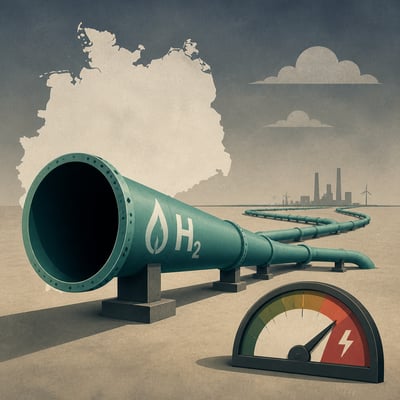
Germany's heating transition is being pulled in two directions: heat pumps and electrification are cutting gas demand, while government and industry plans for hydrogen-ready gas systems and new LNG capacity face demand, cost, and infrastructure mismatches. The strongest signal is that direct electrification appears more immediate and efficient than hydrogen for buildings and much of the power system.

 Climate
 Privacy
 Bob Dylan
 Drones
 Data Centers
 AI Governance
 2026 Maine Senate Race