
Last Update: 06/03/2026 at 2:25 PM EST
Glacier Tourism Risk And Governance
Coverage from WAMC, Grist, and others
Articles
3
Latest Article
03/20
Active Days
40
Executive Summary
Rapid glacier retreat is driving more tourism to melting ice sites, but the same trend is creating safety hazards, added emissions, and governance pressure. The material repeatedly links glacier loss to water security, collapse risk, and limits on how tourism should operate.
Key Points
- Glacier retreat is feeding a growing "last chance" tourism market at heavily visited ice sites.
- Tourism around glaciers creates a clear tension between local income and added emissions, waste, and physical disturbance.
- Glacier meltwater remains important for rivers and aquifers, so retreat carries direct water-security consequences far beyond tourism.
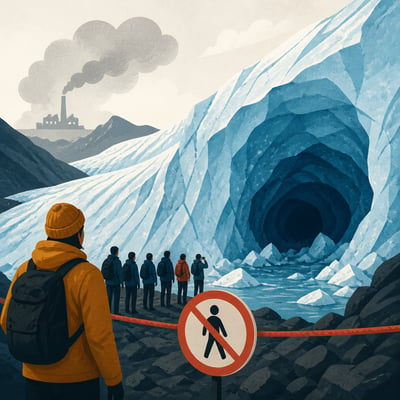
- Ice caves and similar glacier features are increasingly unstable, especially in warm seasons when meltwater raises collapse and flooding risk.
- The Iceland example shows how commercial demand can outrun safety guidance and push operations beyond scientifically supported limits.
- Governance responses are emerging, including shared safety portals and calls for tighter regulation, but the material suggests implementation still lags risk.
- The topic is coherent and structurally climate-linked rather than episodic: glacier loss, tourism pressure, and adaptation governance recur across the material.
Featured Article
Glaciers retreat due to climate change, drawing about 14 million visitors to the ten most visited glaciers in Asia and South America in 2025.
Coverage Timeline: 40 Days
Hover over any logo to see coverage summary, click for full article.
Additional Articles
⭐⭐⭐
Icelandic stakeholders created GLACIS after a 2024 Breiðamerkurjökull ice cave collapse, addressing summer meltwater instability and safety governance for glacier tourism.
⭐️⭐️
Rice University anthropologist Cymene Howe and co-authors report in Nature Climate Change that global glacier tourism and last-chance visits are increasing emissions and local risks as glaciers melt worldwide.