History
07/18/202610 new articles
The story has broadened beyond Hormuz-driven fuel disruption to emphasize which countries are more insulated, and it now adds a new supply-chain vulnerability for clean energy itself. China is newly framed as comparatively protected by stockpiles, domestic generation, and manufacturing strength, while clean-energy minerals and processing bottlenecks become part of the risk picture.
06/24/20263 new articles
The story has shifted from a general energy-security argument to a more concrete and structured split between immediate fossil-fuel hedging and longer-run clean-energy resilience. The new version also adds a technical industrial case study and elevates Thailand as a clearer example of how gas dependence is translating into policy pressure.
06/16/20263 new articles
The story broadens from a general Hormuz-driven energy-price shock to a more explicit resilience narrative centered on clean electricity, electrification, and demand-side solutions. It also adds clearer country examples and a slightly wider geographic frame, showing how different import-dependent systems are responding differently.
05/30/20263 new articles
The story is mostly reinforced rather than rewritten: the Hormuz disruption remains the central driver, but the current version more explicitly emphasizes ongoing fossil-fuel dependence and the split between resilience-driven clean investment and continued gas, coal, and LNG spending. It also sharpens the geographic contrast by highlighting China’s relative insulation versus higher stress in import-dependent systems like Thailand and Bangladesh.
05/27/20263 new articles
The story has become more specific and slightly broader: it now emphasizes measurable price and supply stress from Hormuz disruption, while adding critical-minerals exposure as a second vulnerability for the clean-energy transition. The framing is still the same overall, but the new version sharpens the resilience argument and expands the geographic focus across more of Asia.
05/16/2026Topic Formed
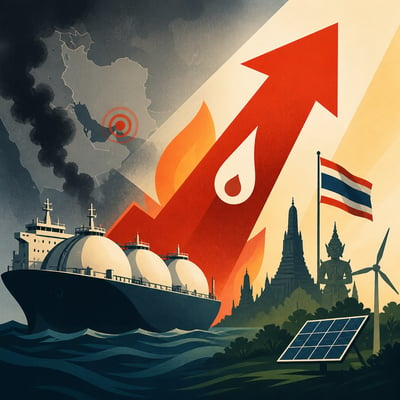
Iran-linked disruption to oil and LNG flows through the Strait of Hormuz is driving a strong energy-security argument for cleaner power systems. Across regions, the same shock is being used to highlight fossil fuel vulnerability, renewable cost competitiveness, and the value of electrification, storage, and local generation. Some countries are responding with more LNG, coal, or nuclear, but the dominant pattern is a shift toward reducing exposure to imported fuels.

 Climate
 Privacy
 Bob Dylan
 Drones
 Data Centers
 AI Governance
 2026 Maine Senate Race