
 Climate
 Privacy
 Bob Dylan
 Drones
 Data Centers
 AI Governance
 2026 Maine Senate Race
Louisiana Carbon Capture Fight Expands
Coverage from Reuters, WBRZ, and others
Articles
38
Active Days
2025
The Topic
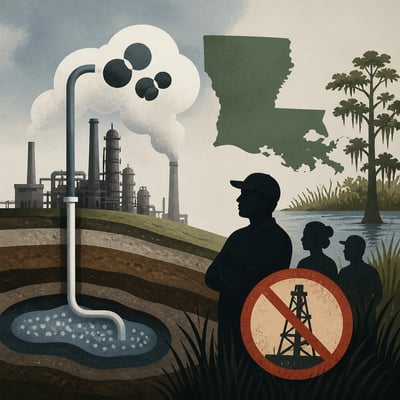
Louisiana is facing a widening dispute over proposed carbon capture and storage projects, with residents and local officials challenging their safety, land-use implications, oversight, and economic benefits. State lawmakers rejected a package of bills that would have expanded parish authority over projects, while communities continue to organize around groundwater protection and eminent-domain concerns. At the same time, permitting remains active and the cancellation of Air Products’ Louisiana clean-energy complex highlights commercial uncertainty around some low-carbon investments.
First Article: 12/15/20
Latest Article: 07/01/26
Summary
- Louisiana lawmakers rejected more than a dozen bills that would have expanded parish authority over carbon capture projects.
- Community opposition focuses on possible CO2 migration, groundwater contamination, long-term oversight, and the use of eminent domain for pipeline and storage rights.
- Supporters present CCS as a way to retain industrial investment and produce lower-carbon fuels and materials for customers seeking reduced emissions.
- More than 60 projects have been described as planned in Louisiana, while opponents cite hundreds of pending permits and seek additional scientific review.
- Air Products terminated its Louisiana Clean Energy Complex after determining expected returns did not meet its criteria, recording up to $2.9 billion in pre-tax charges.
- A related Alabama storage hub is revising its EPA Class VI permit application after regulators requested additional information.
History
The story is now more explicitly broadened to include an active federal permitting fight and a new out-of-state example showing regulatory friction for CCS projects. The Louisiana core remains the same, but the commercial uncertainty and regulatory scrutiny now appear more immediate and concrete.
The story now includes a concrete commercial setback: Air Products canceled its Louisiana Clean Energy Complex after concluding returns were too weak, adding market pressure to the political fight. The legislative fight also sharpened, with parish-control bills failing while opposition continues to center on property rights, groundwater, and eminent domain.
Featured
Timeline: 2025 Days
Hover over any logo to see coverage summary, click for full article.