
 Climate
 Privacy
 Bob Dylan
 Drones
 Data Centers
 AI Governance
 2026 Maine Senate Race
Last Update: 08/01/2026 at 2:00 PM EST
Texas Carbon Capture Faces Policy Resistance
Coverage from Houston Chronicle and others
Articles
3
Active Days
1
The Topic
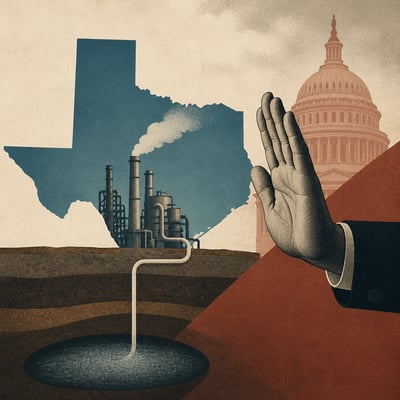
Texas remains a major U.S. carbon capture and storage hub, but federal policy rollbacks, funding cuts, and political skepticism are weakening project economics and slowing some planned developments.
First Article: 12/10/25
Latest Article: 12/10/25
Summary
- Texas has become a key permitting and investment center for U.S. carbon capture and storage, especially around Gulf Coast infrastructure.
- Major oil and industrial firms have committed billions to pipelines, storage sites, and related CCS projects in the region.
- Federal policy changes and clean-energy funding cuts are reducing near-term economic support for large CCS projects.
- Some projects have paused or been reconsidered, including Exxon’s Baytown hydrogen and CO2 capture effort.
- Texas regulators are still processing many Class VI well applications, showing that development continues even under political resistance.
- The main tension is between long-horizon CCS buildout and near-term uncertainty about customers, subsidies, and regulatory support.
History
This topic is new, but as new articles are added to it this area will summarize shifts, changes and expansions of the issues.
Featured
12-10-2025
Texas regulators and major oil companies are advancing Gulf Coast carbon capture projects in the early 2020s despite U.S. climate policy rollbacks and reduced federal clean-energy funding.
12-10-2025
In Texas in the early 2020s, major oil companies and regulators confront weakened incentives for Gulf Coast carbon capture and storage amid shifting federal climate policies.
12-10-2025
Texas Railroad Commission advances carbon storage permits while federal funding and regulatory shifts in 2020s weaken the business case for CCS projects in the Gulf Coast.