
 Climate
 Privacy
 Bob Dylan
 Drones
 Data Centers
 AI Governance
 2026 Maine Senate Race
Manure Digesters Face Climate Tradeoffs
Coverage from Sentient, New Scientist, and others
Articles
5
Active Days
92
The Topic
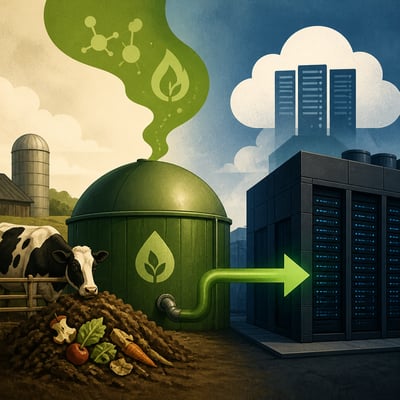
Anaerobic manure digesters are being promoted as a way to capture methane, produce renewable natural gas and supply reliable energy for large users such as data centers. Evidence indicates that digesters can reduce methane from manure storage, but performance varies and leaks, ammonia emissions, other pollution and herd expansion may reduce or complicate their climate benefits. California remains the main policy and deployment focus, while public incentives and USDA financing restrictions have intensified scrutiny.
First Article: 04/07/26
Latest Article: 07/07/26
Summary
- Digesters capture methane from manure and convert it into biogas or renewable natural gas for heat, electricity, vehicle fuel and potentially computing loads.
- California has more than 160 dairy digesters, with additional projects under construction and most concentrated in the Central Valley.
- Monitoring generally shows lower point-source methane after installation, but some digesters have recorded severe leaks and brief emissions spikes.
- Digesters can shift pollution toward ammonia, hydrogen sulphide and other air or water contaminants, according to researchers and community advocates.
- State and federal incentives may encourage larger dairy herds; a preprint study estimated herd expansion could offset about 9% of claimed emissions reductions per digester.
- Ag-Grid Energy and other industry proponents are linking renewable natural gas from manure to data-center and AI-related energy demand.
- The USDA has extended a moratorium on certain anaerobic-digester loan guarantees amid environmental concerns and delinquent loans.
History
The story now places stronger emphasis on California as the policy center and on new scrutiny from federal financing restrictions, while sharpening the concern that herd expansion may partly erase digesters' climate gains. It also shifts the framing slightly toward data-center and AI power demand as a key commercial driver.
The story now includes a concrete New York deployment in which Ag-Grid Energy is using manure- and food-waste-derived renewable gas to power on-site cryptomining, making the computing-use case more real than merely prospective. The framing also broadens the controversy beyond methane capture to include construction spikes and a wider set of local pollution concerns, while regulatory scrutiny remains in place.
Featured
Timeline: 92 Days
Hover over any logo to see coverage summary, click for full article.