History
07/22/20260 new articles
The story now places stronger emphasis on California as the policy center and on new scrutiny from federal financing restrictions, while sharpening the concern that herd expansion may partly erase digesters' climate gains. It also shifts the framing slightly toward data-center and AI power demand as a key commercial driver.
07/22/20260 new articles
The story now includes a concrete New York deployment in which Ag-Grid Energy is using manure- and food-waste-derived renewable gas to power on-site cryptomining, making the computing-use case more real than merely prospective. The framing also broadens the controversy beyond methane capture to include construction spikes and a wider set of local pollution concerns, while regulatory scrutiny remains in place.
07/22/20262 new articles
The story now has a more concrete policy and evidence base: California emerges as the main deployment battleground, and new research plus oversight actions sharpen concerns that digesters may help methane reduction while also driving herd expansion and other pollution. The USDA moratorium adds a clearer signal that financial and environmental doubts are now affecting public support.
- California is the main center of deployment and controversy.
- Some digesters have experienced very large methane leaks.
- Larger barn capacity and herd sizes followed digester installation in California.
- USDA extended its moratorium on certain digester loan guarantees.
- CARB is considering tighter dairy waste reporting and oversight.
06/28/2026Topic Formed
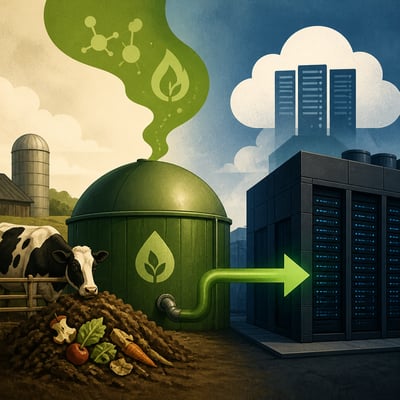
Anaerobic digesters on dairy farms are being promoted as a way to turn manure and food waste into renewable natural gas for data centers, crypto mining, and other electricity-intensive loads. Supporters frame this as a reliable lower-carbon energy option with rural economic benefits, while critics say it can extend factory farming and shift pollution rather than reduce it. The topic centers on whether digesters deliver meaningful climate gains or create new incentives for larger livestock operations and continued fossil-fuel dependence.

 Climate
 Privacy
 Bob Dylan
 Drones
 Data Centers
 AI Governance
 2026 Maine Senate Race