
 Climate
 Privacy
 Bob Dylan
 Drones
 Data Centers
 AI Governance
 2026 Maine Senate Race
Arctic Wildfires And Carbon Release
Coverage from The Guardian, New Scientist, and others
Articles
8
Active Days
142
The Topic
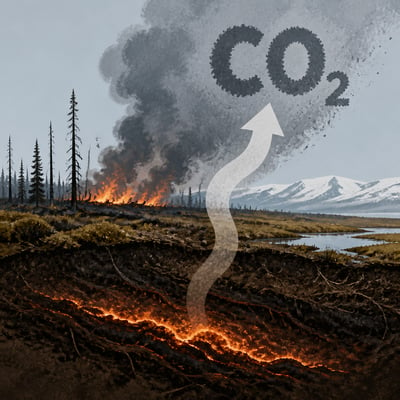
Arctic and Greenland wildfire activity is rising, with unusual early-season fires linked to warm, dry conditions, expanding tundra flammability, and the release of long-stored soil carbon. The material consistently emphasizes peat combustion, carbon and soot feedbacks, and the need to update fire models for Arctic conditions.
First Article: 02/27/26
Latest Article: 07/18/26
Summary
- Greenland wildfires are appearing earlier in the season, including rare June fires near Sisimiut, Nuuk, and Kujalleq.
- Warm, dry conditions, low winter snow, and reduced rainfall are repeatedly cited as drivers of higher fire risk in western Greenland and the Arctic more broadly.
- Tundra and peat fires can smoulder underground, making suppression difficult and extending the duration of smoke and carbon release.
- Wildfire combustion in Arctic soils can release carbon stored for centuries to millennia, adding a feedback to warming.
- Soot and black carbon from fires can darken snow and ice, increasing melt potential on the Greenland Ice Sheet and elsewhere.
- Researchers say global fire models do not yet fully represent Arctic fire behavior and ancient soil-carbon release pathways.
- The signal is dominated by climate-impact and adaptation concerns rather than policy or market developments.
History
The story has shifted from a general warning about overlooked belowground carbon loss to a more specific and urgent account of rising Arctic and Greenland wildfire activity, especially early-season fires in western Greenland. It now emphasizes local fire conditions, smoke and suppression challenges, and broader ice-darkening feedbacks alongside the carbon-emissions issue.
The story has sharpened from a general warning about hidden wildfire carbon to a more specific research framing: studies now emphasize how burn depth and soil conditions drive highly variable belowground emissions, and they add black carbon as an additional warming pathway. The current version also narrows the evidence base to named researchers and a Sweden case study while stressing model gaps in boreal and peat-rich landscapes.
Featured
Timeline: 142 Days
Hover over any logo to see coverage summary, click for full article.