
 Climate
 Privacy
 Bob Dylan
 Drones
 Data Centers
 AI Governance
 2026 Maine Senate Race
Overlooked Pollutants In Climate Policy
Coverage from Responsibleus, Bloomberg, and others
Articles
5
Active Days
18
The Topic
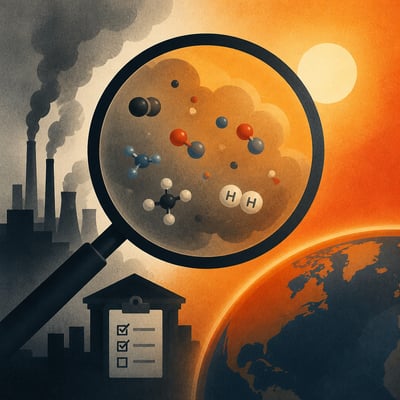
A Science analysis argues that current climate accounting misses a meaningful share of warming caused by pollutants that act indirectly through atmospheric chemistry. It highlights carbon monoxide, nitrogen oxides, volatile organic compounds, and hydrogen leakage as important contributors, estimating they may account for about 15 percent of warming since the early 21st century. The central issue is a policy gap: many of these emissions are tracked in air-quality systems but are not consistently included in climate governance.
First Article: 06/11/26
Latest Article: 06/28/26
Summary
- The dominant finding is that climate accounting focused on CO2 and methane leaves out several indirect warming pollutants.
- Carbon monoxide, nitrogen oxides, and volatile organic compounds are highlighted for their chemical effects on tropospheric ozone and methane lifetime.
- The analysis estimates the neglected pollutants contribute roughly 15 percent of warming since the early 21st century, or about 0.3°C.
- Hydrogen leakage is identified as an additional climate-relevant issue because it can indirectly affect atmospheric chemistry.
- The papers frame the main policy problem as a mismatch between what warms the climate and what is counted in international agreements.
- Existing air-quality monitoring networks are presented as a possible bridge for measuring and regulating these emissions.
History
This topic is new, but as new articles are added to it this area will summarize shifts, changes and expansions of the issues.
Featured
Timeline: 18 Days
Hover over any logo to see coverage summary, click for full article.