
 Climate
 Privacy
 Bob Dylan
 Drones
 Data Centers
 AI Governance
 2026 Maine Senate Race
Platinum-Free Hydrogen Materials
Coverage from ScienceDaily, The Brighter Side of News, and others
Articles
6
Active Days
103
The Topic
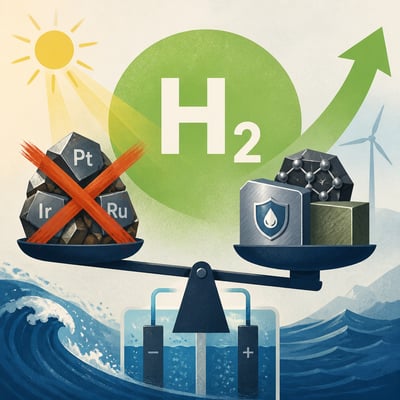
Recent research is focused on cutting green hydrogen costs by replacing platinum-group metals and other expensive electrolyzer materials with cheaper alternatives. One line of work reports durable platinum-free phosphide catalysts for anion-exchange membrane water electrolysis, while another develops corrosion-resistant stainless steel for harsh seawater and electrolyzer conditions. A separate photocatalysis study extends the same cost-reduction theme to solar hydrogen production. The shared significance is not a single finished solution, but a broader materials push toward cheaper, more scalable hydrogen production.
First Article: 02/27/26
Latest Article: 06/09/26
Summary
- Washington University researchers reported platinum-free phosphide catalysts for anion-exchange membrane water electrolysis that ran for more than 1,000 hours.
- The catalyst work centers on replacing platinum-group metals with non-precious materials while maintaining competitive performance and durability.
- The University of Hong Kong developed SS-H2 stainless steel that resists chloride corrosion in harsh electrolyzer environments and could sharply reduce structural material costs.
- A parallel photocatalysis study from Chalmers shows a platinum-free solar hydrogen route using conductive polymer nanoparticles, though it still relies on a sacrificial additive.
- Across the material, scale-up remains a recurring issue, including coating uniformity, water management, impurity handling, and industrial integration.
- The dominant pattern is a materials-first effort to lower capital costs and reduce supply-chain dependence for green hydrogen systems.
History
This topic is new, but as new articles are added to it this area will summarize shifts, changes and expansions of the issues.
Featured
Timeline: 103 Days
Hover over any logo to see coverage summary, click for full article.