
 Climate
 Privacy
 Bob Dylan
 Drones
 Data Centers
 AI Governance
 2026 Maine Senate Race
Fraunhofer Sets Solar-Hydrogen Efficiency Record
Coverage from pv magazine International, AutoNotion, and others
Articles
5
Active Days
82
The Topic
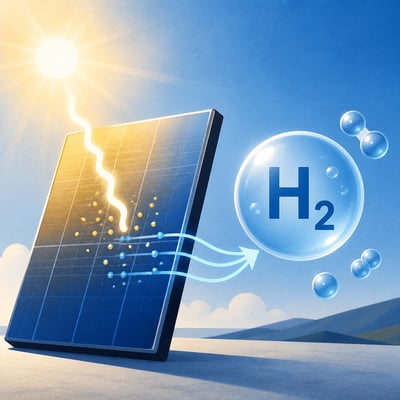
Researchers and startups are developing solar-to-hydrogen systems that connect solar generation more directly to water splitting or combine both functions in a single device. Fraunhofer ISE reported up to 31.3% outdoor efficiency in a concentrated photovoltaic system directly coupled to PEM electrolyzers, while other projects target lower-cost residential production using reused panels or direct photocatalytic panels. The approaches could reduce conversion losses, equipment requirements, land use, or reliance on grid connections, but most remain at demonstration or early commercialization stages.
First Article: 04/14/26
Latest Article: 07/04/26
Summary
- Fraunhofer ISE reported up to 31.3% outdoor solar-to-hydrogen efficiency using concentrated III-V photovoltaics directly connected to PEM electrolyzers.
- Directly matching solar-cell and electrolyzer characteristics can reduce losses from inverters and other intermediate power electronics.
- A residential concept uses end-of-life photovoltaic modules with internal cell reconfiguration to produce an estimated 345 liters of hydrogen per day.
- Photreon presented a 1-square-meter photocatalytic panel intended to produce hydrogen and oxygen directly from sunlight and water without a separate electrolyzer.
- The main trade-off is between high efficiency and system simplicity: concentrated III-V systems require specialized optics and tracking, while simpler concepts report lower efficiency or remain early stage.
- Reported demonstrations are not yet evidence of commercial deployment; scaling, durability, cost, gas separation, and materials impacts remain key constraints.
History
The story now places greater emphasis on lower-cost, distributed hydrogen concepts alongside the high-efficiency Fraunhofer system, framing the field as a trade-off between performance and simplicity. It also tightens the commercial read: these are still early-stage demonstrations, not signs of deployment.
The story now includes a clearer commercialization and implementation layer: Fraunhofer’s high-efficiency demonstrator is linked to a planned spin-off, while the comparison set has expanded to include a working recycled-PV residential hydrogen system with quantified output. The framing also sharpens the trade-off between efficiency and practicality by emphasizing that the leading results still rely on specialized, early-stage setups.
Featured
Timeline: 82 Days
Hover over any logo to see coverage summary, click for full article.