
 Climate
 Privacy
 Bob Dylan
 Drones
 Data Centers
 AI Governance
 2026 Maine Senate Race
Guterres Presses Climate Finance and AI Disclosure
Coverage from Inside Climate News, ESG Dive, and others
Articles
15
Active Days
141
The Topic
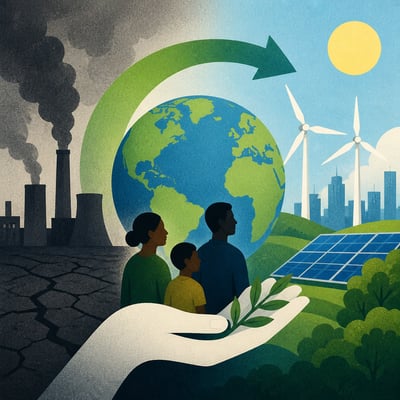
UN Secretary-General António Guterres is calling for a faster and more equitable shift from fossil fuels to clean energy, alongside substantially greater financing for climate adaptation and sustainable development. He has also urged major AI companies to disclose data centers’ emissions, water use, and land footprint and to power those facilities with renewable electricity by 2030. The proposals highlight persistent gaps between climate ambitions and available finance, particularly for developing countries facing higher borrowing costs and greater climate risks.
First Article: 02/24/26
Latest Article: 07/14/26
Summary
- Guterres called for steep emissions cuts this decade, a faster fossil-fuel transition, and net-zero emissions by 2050.
- The UN is urging major AI companies to disclose data centers’ carbon, water, and land impacts and use renewable electricity by 2030.
- Climate adaptation remains underfunded, with calls to expand grants, replenish multilateral climate funds, and improve access to pre-arranged disaster finance.
- Developing countries face higher capital costs and receive a disproportionately small share of global clean-energy investment.
- Multilateral development banks, guarantees, blended finance, and debt-related tools are presented as central to closing climate and SDG financing gaps.
- Renewables are expanding rapidly, but fossil fuels still supply a substantial share of electricity used by data centers and the wider energy system.
- The agenda links climate action with energy security, worker support, resilience, scientific independence, and climate justice.
History
The story is now framed more explicitly as a broader push for faster fossil-fuel phaseout and climate-finance reform, not just AI data-center transparency. It also adds stronger emphasis on debt, concessional finance, and pre-arranged disaster funding for developing countries.
The story is now framed less as a narrow set of climate-finance and AI reporting demands and more as a broader push for accelerated clean-energy investment tied to adaptation, development, and community resilience. It also adds more explicit policy detail on how MDBs should fund the transition and elevates adaptation-related services such as early warning, insurance, and worker support.
Featured
Timeline: 141 Days
Hover over any logo to see coverage summary, click for full article.