
 Climate
 Privacy
 Bob Dylan
 Drones
 Data Centers
 AI Governance
 2026 Maine Senate Race
U.S. Pauses Ocean Monitoring Shutdown
Coverage from The New York Times, The Guardian, and others
Articles
17
Active Days
23
The Topic
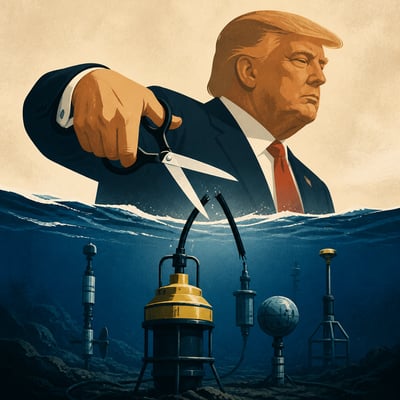
The National Science Foundation moved to remove more than 900 instruments from the Ocean Observatories Initiative, a U.S.-funded network that measures ocean conditions relevant to climate research, weather forecasting, fisheries, and coastal hazards. After bipartisan Senate opposition and broader scientific concern, the NSF paused further removal and said an expert panel would assess the program’s future, although some equipment had already been retrieved. The dispute highlights the importance of maintaining long-term ocean observations while leaving the network’s final scope and operating model unresolved.
First Article: 06/02/26
Latest Article: 06/24/26
Summary
- The Ocean Observatories Initiative cost about $368 million to install in 2016 and was designed to operate for at least 25 years.
- The network provides continuous measurements used for ocean heating, El Niño, marine heatwaves, storms, fisheries, and coastal hazards.
- The NSF initially planned to remove most in-water infrastructure over roughly 15 months, citing changing priorities and operating-cost savings.
- The agency later paused further removal and de-scoping while an expert panel evaluates the initiative.
- Some instruments off Oregon and Washington had already been removed, creating uncertainty over restoration and data continuity.
- Scientists warn that losing U.S. observations would leave important gaps in the wider Global Ocean Observing System.
- Congressional opposition has been bipartisan, while the House’s next steps and the network’s eventual configuration remain unclear.
History
The key update is that the NSF’s removal plan has been partially halted: after bipartisan Senate pressure, the agency paused further dismantling and brought in an expert review, leaving the network’s future unresolved. The story also sharpens from a general backlash into a concrete implementation question, since some instruments were already removed.
The story broadened beyond the Ocean Observatories Initiative to include a parallel NOAA funding fight over Great Lakes and regional observation systems, making the overall dispute about federal climate-observation capacity rather than one network alone. The underlying congressional and EU pushback remains consistent, but the scope is now wider and more explicitly multi-institutional.
Featured
Timeline: 23 Days
Hover over any logo to see coverage summary, click for full article.