
 Climate
 Privacy
 Bob Dylan
 Drones
 Data Centers
 AI Governance
 2026 Maine Senate Race
EVs Become Flexible Grid Assets
Coverage from EurekAlert!, Electrek, and others
Articles
10
Active Days
170
The Topic
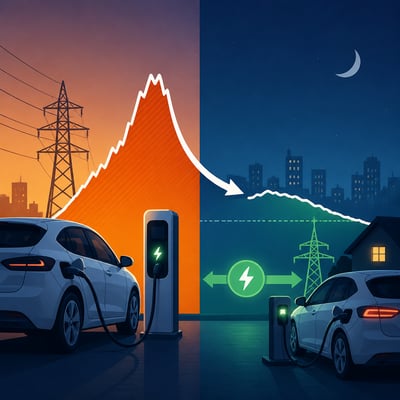
Electric vehicles are increasingly being treated as flexible grid resources rather than only sources of additional electricity demand. Vehicle-to-grid, managed charging, community batteries, and school-bus fleets can shift or return power during peak periods, support renewable integration, and provide backup power, but wider use depends on chargers, grid upgrades, customer incentives, common standards, and coordinated participation by automakers and utilities.
First Article: 01/20/26
Latest Article: 07/08/26
Summary
- Vehicle-to-grid programs can discharge parked EVs during peak demand and recharge them when electricity is more available.
- Community-scale batteries can address the voltage swings created by daytime solar generation and nighttime EV charging.
- Electric school buses are emerging as a concentrated source of bidirectional capacity, with projects in California providing grid support and potential emergency backup.
- Managed charging can reduce peak loads without exporting electricity, while vehicle-to-home systems can supply power during outages.
- Pilots and modeling indicate that V2G is not sufficient on its own; transformers, transmission, distribution systems, and charging controls may still require upgrades.
- Automakers, utilities, aggregators, and customers must coordinate data access, consent, tariffs, battery controls, and technical standards for broader participation.
- Several reported financial and capacity estimates come from small pilots, modeling exercises, or company-led programs rather than mature commercial deployment.
History
The story is now framed more explicitly around EVs as grid-flexibility assets, with greater emphasis on coordination among automakers, utilities, aggregators, and customers. It also adds ChargeScape and elevates school-bus fleets and community batteries as practical implementation channels.
The story now broadens from EVs as flexible grid assets to a more explicit systems-level framing that includes community batteries, voltage stabilization, and grid investment needs. It also sharpens the barriers to adoption by emphasizing limited tariffs, participation programs, and technical integration challenges.
Featured
Timeline: 170 Days
Hover over any logo to see coverage summary, click for full article.