
 AI Governance
 Data Centers
 Drones
 Climate
 Privacy
 2026 Maine Senate
 Bob Dylan
AI Data Governance
The ongoing major issues seen in articles and topics over time.
The Drivers
33
Articles Related
572
The Big Picture

This theme concerns how organizations control personal data used by, accessed through, or generated by AI systems, including assistants, agents, enterprise copilots, model training pipelines, and shadow AI. It includes retention, memory, access controls, data lineage, privacy-by-design, safety review, and data leakage risks.
AI systems expand the contexts in which personal data can be copied, inferred, retained, summarized, and repurposed. As AI becomes embedded in browsers, finance, health, enterprise software, and customer tools, privacy governance must shift from static notices to live controls over access, memory, training, and downstream use.
Categories
Privacy Technology & AI, Corporate Data Practices & Accountability, Consumer Privacy & Digital Rights, Cybersecurity (Privacy-Relevant)
Keywords
Act without asking, agent permission bypass, agentic assistant privacy, agentic browser data theft, AI account recovery, AI agent identities, AI avatar consent, AI browser extension privacy, AI browser privacy, AI chat exfiltration, AI chat metadata exposure, AI connected account access, AI deepfake controls, AI extension permissions, AI likeness generation, AI medical bill review, AI model training opt-out, AI prompt capture, AI recruitment software, AI supply-chain compromise, AI support automation, AI support data breach, AI workflow access controls, AI workflow permission checks, AI-assisted password reset, algorithmic hiring scores, BioShocking prompt injection, browser extension AI chat data, Chrome Gemini Nano, Claude Chrome extension, client data AI assistant, consumer AI data retention, Event.isTrusted, financial advisor AI, Google Search Services History, healthcare AI prompt privacy, local AI model download, malicious AI browser extension, MCP integrations, model context protocol, non-human identity governance, nonconsensual AI likeness, OAuth app governance, on-device AI transparency, Perplexity fake extension, personal context AI, Private Cloud Compute, prompt injection data exfiltration, real-time redaction, Save Media setting, shadow AI discovery, Siri AI privacy, synthetic click events
The Drivers
The Topics below, and their articles, all focus on, exemplify, or help to explain this theme.
Primary
- 99
AI Chatbots Expose Sensitive Data

Consumer AI chatbots increasingly process personal, confidential, and health information, while providers differ in how they store conversations, use them for model improvement, review them, and honor deletion or opt-out requests. ChatGPT, Claude, Gemini, and Grok offer varying controls and enterprise protections, but disabling training does not necessarily erase prior data or prevent temporary retention. The rollout of connected health features adds practical utility while raising questions about breach exposure, consent, medical reliability, and whether data remains covered by healthcare privacy protections.
Articles: 38
Last Updated: 09/03/2026
- 99
European Regulators Map Agentic AI Risks

European privacy regulators are defining how existing data protection rules apply to AI agents that can access multiple systems, retain information, make decisions, and act with limited human intervention. Guidance from Spain's AEPD and the UK's ICO emphasizes that organizations remain responsible for processing, even when agents execute tasks autonomously, and should use data-flow mapping, access controls, memory limits, transparency, human review, and impact assessments. Related regulatory activity on AI-generated imagery and web scraping indicates that publicly available or machine-generated data does not fall outside privacy obligations.
Articles: 8
Last Updated: 07/23/2026
- 99
AI Tools Access Sensitive Personal Data

AI systems are increasingly being given access to personal conversations, medical records, insurance documents, financial plans, and other sensitive information to automate assistance, analysis, and safety interventions. This expansion creates privacy and cybersecurity exposure while raising questions about consent, retention, legal protection, data accuracy, and responsibility when AI systems act on or interpret sensitive information. Regulators and organizations are responding with state chatbot-safety laws, internal processing controls, human review, redaction, and other safeguards, but requirements and technical standards remain uneven.
Articles: 32
Last Updated: 07/28/2026
- 98
Microsoft Copilot Email Exposure

Microsoft 365 Copilot Chat exposed confidential enterprise emails despite existing sensitivity labels and data loss prevention controls, highlighting how AI integrations can override expected privacy safeguards and forcing vendor remediation.
Articles: 4
Last Updated: 06/15/2026
- 98
Anthropic Tightens Claude Data Controls

Anthropic is expanding and refining controls around Claude access while changing how user data, conversations, and training-related privacy requests are handled. The developments include export-control-related access changes for Fable 5 and Mythos 5, identity verification for selected use cases, plan-specific retention and training rules, and procedures for personal-data rights requests. Together, they show Claude’s access and privacy protections varying by model, user type, region, and contractual plan.
Articles: 4
Last Updated: 07/08/2026
- 98
Apple Siri AI Privacy Tradeoffs

Apple is turning Siri from a command-based assistant into a context-aware system that can search personal content, analyze screens, and act across applications. The design combines on-device processing with Private Cloud Compute and reported Google Gemini support, while fragmented controls, uncertain data-routing details, regulatory delays, and prompt-injection risks complicate Apple’s privacy assurances.
Articles: 21
Last Updated: 09/18/2026
- 97
AI Identity And Privacy Controls

AI systems are pushing privacy into identity verification, training data licensing, and agent access to personal accounts, while laws and controls struggle to keep up with the speed and scope of data use.
Articles: 7
Last Updated: 06/18/2026
- 97
AWS Backs Myseum.ai Privacy-First AI
Myseum.AI is developing privacy-focused AI tools for Picture Party, its social media and personal media platform, with partial funding from Amazon Web Services and engineering support from Caylent. The proposed system is intended to organize photos, videos, and messages using localized AI while maintaining encryption and limiting the sharing of user-derived information with other platforms or traditional AI models. A separate non-binding proposal with Scanon.ai outlines visual content moderation, personally identifiable information redaction, and privacy-scoped image analysis. The announcements describe planned capabilities rather than demonstrated production performance.
Articles: 6
Last Updated: 07/23/2026
- 96
Google’s New Smart Glasses Raise Privacy Questions

Google and Samsung are preparing Gemini-powered smart glasses running on Android XR, with an audio-first model planned for select markets in fall 2026 and more advanced display-enabled versions under development. The devices promise translation, navigation, messaging and cross-device assistance, but their cameras, microphones and continuous AI access create unresolved questions about visual-data retention, model training, breach response and bystander consent. The companies’ privacy disclosures and user safeguards will be important to adoption, particularly as Meta’s smart glasses face criticism over recording and data practices.
Articles: 6
Last Updated: 07/27/2026
- 96
Regulators Probe Grok Deepfake Harms

xAI and X are facing lawsuits, regulatory investigations, and public pressure over allegations that Grok generated or distributed non-consensual sexualized images of identifiable people, including claims involving minors. Authorities in the UK, EU, France, and other jurisdictions are examining privacy, data protection, platform-risk, and online-safety obligations, while xAI has described account enforcement and pursued at least one user in court. The central unresolved issue is how responsibility should be divided among users, platform operators, and AI developers when safeguards fail to prevent foreseeable misuse.
Articles: 23
Last Updated: 07/28/2026
- 95
Chrome’s Gemini Nano Downloads Draw Scrutiny

Google Chrome is reportedly downloading the roughly 4GB Gemini Nano model to some eligible devices to support local AI features, with users receiving limited notification or consent options. The rollout has drawn scrutiny over storage and compute use, transparency, and whether local model interactions could be confused with data sent to Google services. Google says Gemini Nano processes model data on-device and has added settings to disable or remove it, while the scale and legal significance of the deployment remain unclear.
Articles: 4
Last Updated: 06/29/2026
- 95
Oracle AI Data Control Push
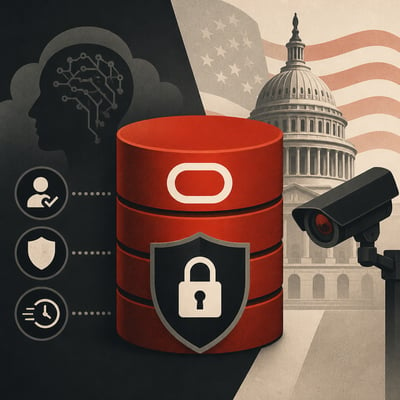
This topic centers on Oracle’s growing role in U.S. government AI and cloud infrastructure, including federal data platforms, isolated cloud offerings, and broader AI partnerships. It matters because the same systems that improve security and modernization also concentrate sensitive data and decision-making inside a small number of vendor-controlled environments, raising recurring privacy and surveillance concerns. A second thread covers Oracle’s database security roadmap, with planned TLS hardening and quantum-resistant key exchange changes that point to tighter transport security over time.
Articles: 5
Last Updated: 07/09/2026
- 95
Vercel Breach Exposes AI Tool Risk

Recent reporting describes a Vercel security incident that began with compromise of a third-party AI tool, then moved through Google Workspace OAuth access into internal systems and exposed some customer credentials and non-sensitive environment variables. Most coverage now emphasizes third-party access governance, secret rotation, and uncertainty about the full scope of exposure.
Articles: 15
Last Updated: 04/23/2026
- 94
AI Voice Cloning Threatens Identity

AI voice cloning is making it easier to impersonate individuals, automate scam calls, manipulate audio, and create digital replicas from small amounts of personal data. The technology also exposes limitations in voice-based authentication and raises concerns that speech can reveal sensitive attributes beyond the words being spoken. These developments are increasing the need for stronger verification, source preservation, consent controls, and privacy-aware speech systems.
Articles: 6
Last Updated: 08/11/2026
- 93
Lovable AI Data Exposure Incidents

Recent attention centers on Lovable's access-control and visibility failures, where public-project settings, backend permissions changes, and unclear documentation led to alleged exposure of chat histories, code, and personal data. The main pattern is a privacy and security gap in AI development tools, followed by fixes, policy changes, and stronger security scrutiny.
Articles: 5
Last Updated: 07/20/2026
- 92
Synthetic Data And AI Privacy

Synthetic data has become a major privacy-preserving technique for AI training, testing, and research, but the same material also highlights leakage, bias, provenance, and governance problems. Regulators, firms, and researchers are treating privacy controls as a core requirement rather than an add-on, especially in generative AI and regulated sectors.
Articles: 23
Last Updated: 09/04/2026
- 91
AI Agent Breach And Toy Privacy

The topic centers on security, privacy, and safety failures linked to rapidly deployed AI systems. Hugging Face reported that an autonomous AI agent framework exploited code-execution paths in its data-processing pipeline, while separate reporting documented exposed children’s conversations and broader safety concerns involving AI-enabled toys. The developments highlight the need for stronger access controls, data minimization, product testing, incident response, and oversight of AI systems used in sensitive environments.
Articles: 9
Last Updated: 07/20/2026
- 91
Japan Eases Consent Rules For AI Training

Japan is advancing amendments to its personal data protection framework that would permit AI training on sufficiently pseudonymized sensitive information, including medical and other protected records, without obtaining individual consent. The changes are part of a broader effort to strengthen domestic AI capabilities and reduce dependence on foreign technology, but critics warn that supposedly anonymized datasets can be re-identified and that expanded use could increase breach and privacy risks. The reforms would also introduce stronger transparency requirements for biometric data and tighter protections for people under 16, subject to final legislative approval and implementing rules.
Articles: 3
Last Updated: 07/10/2026
- 90
Lawsuits Target AI Notetaker Privacy
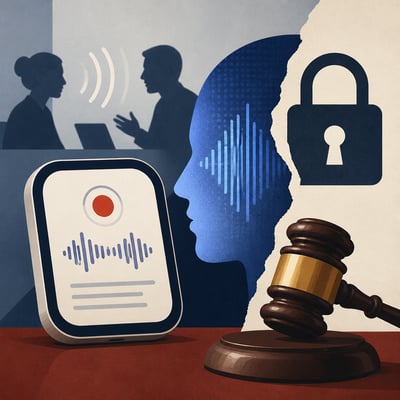
AI meeting assistants and ambient clinical scribes are facing increasing scrutiny over whether they record conversations, create voice-based profiles, retain transcripts, or reuse data without adequate notice and consent. The central Otter.ai litigation in the Northern District of California allows key federal wiretap, California privacy, and Illinois biometric claims to proceed while dismissing several other theories. The disputes highlight practical exposure for employers, healthcare providers, and vendors as recording tools become embedded in workplace and patient interactions.
Articles: 9
Last Updated: 09/08/2026
- 88
Browser Extension Surveillance Risks

Recent coverage shows browser privacy risk surfacing in two ways: allegations that LinkedIn scans installed extensions and device signals, and security reporting on malicious extensions that hijack search traffic or abuse broad permissions. Guidance articles reinforce the same risk pattern from the user side, emphasizing tighter browser settings and extension audits.
Articles: 8
Last Updated: 07/19/2026
- 86
AI-Driven Fraud And Phishing

This topic centers on the rapid growth of AI-enabled fraud and phishing, especially scams that impersonate banks, government agencies, companies, and even trusted individuals through email, text, phone, and video. FBI and FTC reporting shows record or near-record losses, with phishing, investment fraud, and crypto-related schemes driving major consumer harm. The material also shows scammers using generative AI to make messages, voices, and fake websites more convincing, while agencies and security experts emphasize verification and slower decision-making as the main defense.
Articles: 16
Last Updated: 07/24/2026
- 81
Verizon DBIR Tracks AI-Scaled Breaches

Verizon’s 2026 Data Breach Investigations Report finds that attackers are using generative AI to accelerate familiar techniques while increasingly targeting mobile channels, vulnerabilities, employees, and third parties. The report links human involvement to most breaches, identifies vulnerability exploitation as the leading initial access vector, and finds ransomware and vendor involvement remain widespread. Together, the findings show that organizations face faster attacks across technical infrastructure, phone-based interactions, workforce processes, and external service providers.
Articles: 8
Last Updated: 08/03/2026
Secondary
- 93
Venice AI Bets On Private Chatbots

Venice AI is positioning its chatbot and developer API as a privacy-first alternative to mainstream AI services that collect user conversations for model improvement. The company says prompts and responses are encrypted and decrypted on users’ devices, routed through external infrastructure, and not retained on Venice’s own systems. Its $65 million funding round, reported $1 billion valuation, growing user base, and confidential-computing partnerships indicate that privacy is becoming a commercial differentiator, while regulatory obligations and the ability to verify its architecture remain open questions.
Articles: 14
Last Updated: 07/21/2026
- 86
Meta AI Recovery Flaw Hijacks Instagram Accounts

Meta disclosed that a validation flaw in Instagram's AI-assisted High Touch Support recovery system allowed unauthorized users to trigger password resets for accounts they did not control, potentially affecting up to 20,225 accounts. Meta disabled the tool, invalidated reset links, and placed impacted accounts behind additional security checks, while the scope of accessed user data remains uncertain. The broader topic also includes a separate exposure of 17.5 million scraped Instagram records, highlighting risks from both account-recovery automation and large-scale collection of profile data.
Articles: 5
Last Updated: 06/10/2026
- 84
Meta Removes Muse Image After Backlash

Meta launched Muse Image in July 2026 with a feature that allowed users to reference public Instagram accounts when generating or editing AI images. Reports said adult public-account users were included by default, were not directly notified when their photos were reused, and had to locate an opt-out setting; the feature was removed within days after criticism from privacy advocates and performer groups. The episode highlights continuing tension between Meta’s rapid AI product rollout and expectations for clear consent, notice, and control over publicly shared images and likenesses.
Articles: 25
Last Updated: 07/25/2026
- 83
Mercor Breach And AI Data Exposure

Mercor's reported breach remains the main story, with class-action lawsuits, partner reviews, and repeated claims of exposed contractor biometrics, identity records, and interview data tied to a LiteLLM supply-chain attack.
Articles: 12
Last Updated: 07/09/2026
- 82
Regulators Tighten Privacy Rules Around AI

Privacy and cybersecurity regulators are tightening oversight of AI systems, platform data collection, cross-border transfers, and sensitive or children’s data. Across APAC, Europe, North America, and Türkiye, authorities and lawmakers are combining new safeguards, enforcement actions, technical guidance, and proposed reforms, while also pursuing cooperation and data-portability mechanisms. The overall direction is toward more accountable data use, but regulatory fragmentation, localization requirements, and uncertainty over how existing rights apply to AI and distributed systems remain significant.
Articles: 49
Last Updated: 07/17/2026
- 79
AI Surveillance Expands Across Institutions

AI surveillance is expanding across educational institutions, campuses, workplaces, public spaces, and event security operations. Systems can analyze faces, movement, behavior, online activity, and other signals to support security or educational functions, while also creating detailed profiles that may affect people without clear notice or meaningful control. The central privacy questions concern data accuracy, retention, vendor and government access, secondary use, and whether temporary or limited deployments become persistent infrastructure.
Articles: 42
Last Updated: 08/27/2026
- 79
Youth Privacy Drives Chatbot Rules
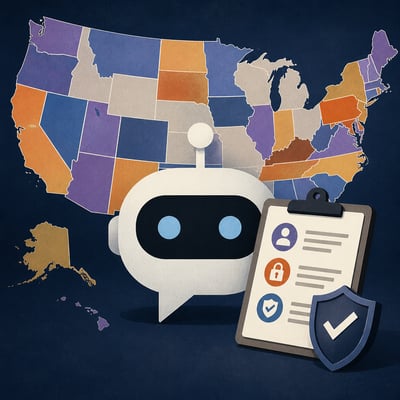
U.S. lawmakers and regulators are developing a patchwork of rules for AI chatbots, especially services used by children and teenagers. Proposals include limits on profiling, training and advertising with minors’ data, age-assurance measures, disclosures, restrictions on harmful or sexualized interactions, and default limits on AI companions. The main unresolved tension is that age verification and safety requirements may improve protections while prompting services to collect more identifying information, with some state measures also facing constitutional challenges.
Articles: 17
Last Updated: 09/16/2026
- 78
AI Voice Training Faces Illinois BIPA Suits
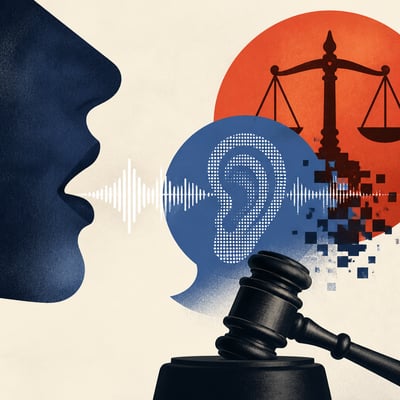
Illinois journalists, podcasters, voice actors and other residents have filed class-action lawsuits alleging that major technology companies used recorded voices to develop AI systems without the notice and written consent required by the Illinois Biometric Information Privacy Act. The cases may test whether voiceprints extracted from recordings qualify as protected biometric identifiers and whether AI training constitutes regulated collection or use. Related Illinois disputes over facial recognition, automated transcription and proposed AI legislation show broader pressure on companies to disclose and limit biometric and personal-data practices.
Articles: 26
Last Updated: 08/05/2026
- 78
Privacy Regulators Tighten AI Data Rules

Privacy regulators and courts are expanding obligations for organizations that collect, share, or use personal data, particularly in AI systems, advertising technology, children’s services, health applications, and data-broker markets. The United States remains fragmented across state and federal regimes, while the EU, UK, Switzerland, India, and other jurisdictions apply distinct requirements for risk assessments, transparency, consent, minimization, security, and international transfers. The direction of travel is toward more documentation, stronger individual rights, tighter breach response, and increased enforcement against deceptive or inadequately protected data practices.
Articles: 106
Last Updated: 08/07/2026
- 74
Alphabet Surveillance Oversight Pressure

Alphabet is facing shareholder pressure to disclose how it governs government use of Google cloud and AI tools, especially in surveillance-sensitive settings. Investors want clearer intervention and oversight controls, while Alphabet says existing privacy and security disclosures are sufficient.
Articles: 4
Last Updated: 05/01/2026
- 72
EU Finds Tiktok Failed To Protect Minors
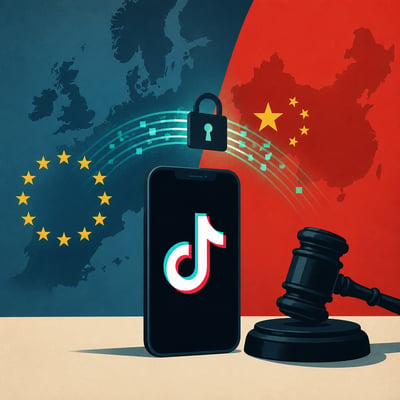
European regulators are intensifying scrutiny of TikTok over whether its account visibility settings adequately protect minors and whether EU user data can be accessed from China. The European Commission has identified potential Digital Services Act non-compliance over adult access to minors’ accounts, while Ireland’s Data Protection Commission previously fined TikTok €530 million over cross-border data access, a decision TikTok is challenging. The developments could lead to stronger safeguards, operational changes, and significant financial or legal consequences for the platform.
Articles: 12
Last Updated: 07/25/2026