
 Climate
 Privacy
 Bob Dylan
 Drones
 Data Centers
 AI Governance
 2026 Maine Senate Race
Antarctic Climate Archives And Ice Retreat
Coverage from ScienceDaily, Inside Climate News, and others
Articles
7
Active Days
116
The Topic
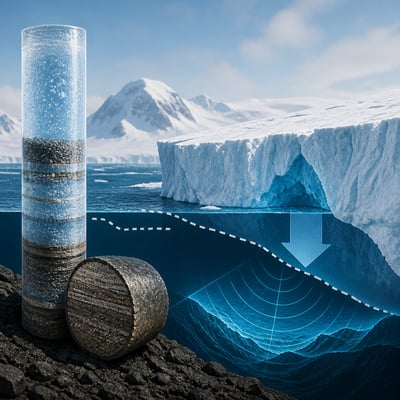
Recent work is expanding Antarctica's climate record through deep ice, sediment, and radar studies, while reinforcing concern that West Antarctic ice loss can be triggered by modest warming and affect long-term sea level. The strongest signal is a mix of new paleoclimate evidence and ice-sheet stability research, with most items tied to Antarctic field campaigns and model refinement. A smaller side stream looks at Arctic lake sediment cores and human occupation history, but the dominant pattern remains Antarctic climate archives used to constrain future sea-level risk. The topic is coherent and fairly stable, with dense scientific signal and limited fragmentation.
First Article: 02/09/26
Latest Article: 06/04/26
Summary
- Antarctic field campaigns are recovering unusually old ice and sediment records that extend climate evidence back millions of years.
- Those records are being used to refine estimates of past greenhouse gases, ocean temperature, and ice-sheet behavior.
- West Antarctic stability remains the most policy-relevant applied theme, especially where sediment cores and modeling point to retreat under modest warming.
- Sea-level rise is a persistent downstream concern, with several pieces linking Antarctic ice loss to long-term or hard-to-reverse impacts.
- Radar and satellite work on buried Antarctic structures adds a geophysical layer to the same stability question.
- A smaller Arctic sediment-core strand adds paleoclimate context, but it is secondary to the Antarctic focus.
- The current signal is science-heavy, method-driven, and largely coherent rather than fragmented.
History
This topic is new, but as new articles are added to it this area will summarize shifts, changes and expansions of the issues.
Featured
Timeline: 116 Days
Hover over any logo to see coverage summary, click for full article.