History
07/22/20260 new articles
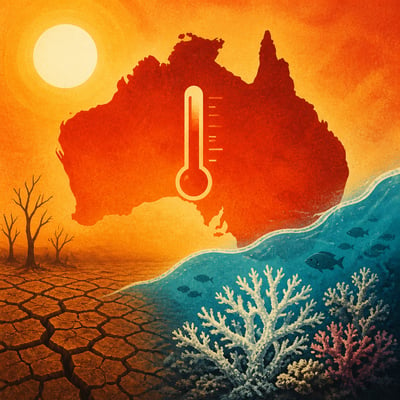
The story has shifted from a broad warning about warm winter conditions to a more explicit emphasis on drying, fire danger, and cascading ecological impacts. The current version also tightens the framing on fisheries by emphasizing combined heat, rainfall, cyclone, and water-flow disruptions and the role of El Niño and La Niña in redistributing those risks.
07/22/20260 new articles
The story now broadens from winter warmth and snow loss to a more explicit multi-season climate-risk picture, linking warming and drying to hotter summers, drought, water stress, and wider fisheries impacts. It also adds a clearer emphasis on compound climate drivers and non-climate pressures affecting vulnerable species.
07/22/20261 new articles
The story shifts from broad climate-linked impacts across Australia to a tighter focus on an unusual winter-warmth episode and its near-term consequences for snow, fire risk, and water stress. It also adds more specific ecological and regional examples, especially for south-eastern Australia and northern fisheries.
- Sydney recorded its warmest June mean temperature on record.
- Record July warmth reduced natural snowfall and increased snowmaking reliance.
- Upper Murrumbidgee projections show higher fire-weather severity under stronger warming.
- Endangered spiny crayfish face die-off risks from warmer, drier, fire-affected creeks.
- Compound climate effects are unevenly disrupting northern fisheries and coastal species.
07/20/20265 new articles
The story has broadened from documenting repeated heat and marine impacts to emphasizing rising fire-weather risk and wider ecosystem damage, while the framing shifts toward coordinated adaptation and management. The current version also looks more operational, with official assessments and attribution work reinforcing the warming-driven risk picture.
06/29/20260 new articles
The story is reframed from a set of severe climate impacts into a broader, more integrated climate-risk narrative for Australia. The new version adds uneven regional outcomes and explicitly elevates adaptation and emissions cuts as necessary responses.
06/12/20263 new articles
The story has broadened from general climate-driven heat and marine stress to a more detailed picture of cascading ecological damage, especially in northern marine systems and freshwater habitats. It also now presents stronger attribution evidence that recent Australian heatwaves are becoming more likely and more intense under warming.
- Northern Australian fisheries are being disrupted by compound climate effects.
- Hydrologic disconnection is limiting species movement and survival.
- Freshwater and creek species face high vulnerability from warming and drying.
- Record marine heat is causing major impacts around Australia.
- Attribution work now emphasizes more likely, more intense heatwaves.
05/19/20260 new articles
The story has shifted from broad evidence of climate-driven heat and marine stress to a sharper emphasis on severity and consequences, including higher health burden, bushfire risk, and a new energy-supply resilience angle. It also newly highlights toxic algal blooms in South Australia as part of the marine impacts.
05/11/2026Topic Formed
The cluster is centered on Australia’s worsening climate impacts, especially extreme heat events and marine ecosystem damage. The current signal emphasizes attribution of recent heatwaves to human-caused warming, shortened recurrence intervals for extreme heat, and concurrent evidence of escalating marine heat stress, coral bleaching, and biodiversity pressure. The cluster is cohesive and mostly observational, with a strong current focus on measured impacts rather than policy debate.

 Climate
 Privacy
 Bob Dylan
 Drones
 Data Centers
 AI Governance
 2026 Maine Senate Race