
 Climate
 Privacy
 Bob Dylan
 Drones
 Data Centers
 AI Governance
 2026 Maine Senate Race
High Consumers Drive Environmental Damage
Coverage from The Guardian, Nature, and others
Articles
9
Active Days
86
The Topic
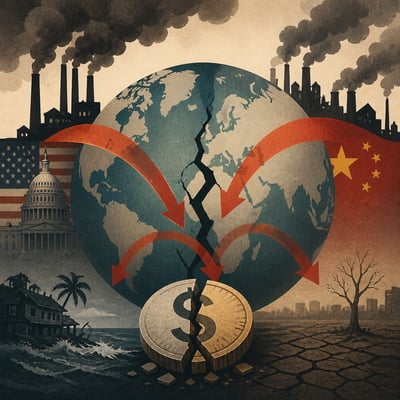
Recent research puts a monetary value on environmental harm linked to high consumption and historical fossil-fuel emissions. One study estimates that the global top 10% of consumers cause up to $5.7 trillion in annual damage across climate, biodiversity, nutrient pollution, and freshwater use, while separate work links US emissions since 1990 to more than $10 trillion in global economic losses. The findings focus attention on concentrated responsibility, cross-border loss and damage, and policy options such as luxury, wealth, and carbon taxation, while researchers stress that the estimates are incomplete and often conservative.
First Article: 03/25/26
Latest Article: 06/18/26
Summary
- The global top 10% of consumers are estimated to cause $1.7 trillion to $5.7 trillion in annual damage across four environmental boundaries.
- Biodiversity loss represents the largest estimated share of the high-consumption damage bill, followed by climate disruption.
- Estimated per-person damage is substantially higher for the US top 10% than for the global top decile.
- A separate study attributes more than $10 trillion in global economic damage since 1990 to US emissions, with poorer countries bearing a disproportionate share of losses.
- The research links environmental harm to food, fossil-fuel energy use, flights, household heating and cooling, and investment-related emissions.
- Proposed responses include polluter-pays measures, luxury-consumption taxes, wealth and carbon taxes, redistribution, and public investment.
- The estimates do not capture all planetary boundaries, investment impacts, or several non-economic and ecological harms.
History
The story is sharpened by a new, more explicit claim that US emissions since 1990 have caused more than $10 trillion in global losses, and the framing now centers more clearly on concentrated responsibility among high-consuming households and historical fossil-fuel emitters. It also broadens the policy menu from taxes alone to redistribution and public investment.
The story has become more quantified and more policy-specific: the current version adds new estimates for the global top 10% of consumers, while also extending the historical-emissions damages framework to specific company and country attribution. It now more clearly supports targeted taxes and fuller accounting of investment-related emissions, while emphasizing methodological uncertainty.
Featured
Timeline: 86 Days
Hover over any logo to see coverage summary, click for full article.