History
07/23/20260 new articles
The story is sharpened by a new, more explicit claim that US emissions since 1990 have caused more than $10 trillion in global losses, and the framing now centers more clearly on concentrated responsibility among high-consuming households and historical fossil-fuel emitters. It also broadens the policy menu from taxes alone to redistribution and public investment.
07/22/20261 new articles
The story has become more quantified and more policy-specific: the current version adds new estimates for the global top 10% of consumers, while also extending the historical-emissions damages framework to specific company and country attribution. It now more clearly supports targeted taxes and fuller accounting of investment-related emissions, while emphasizing methodological uncertainty.
- Top 10% consumer damage estimated at $1.7tn-$5.7tn annually.
- US emissions since 1990 linked to over $10tn damage.
- Chinese emissions since 1990 linked to about $9tn damage.
- Saudi Aramco named among major fossil-fuel companies.
- Estimates omit investment-related emissions and some impacts.
06/19/20264 new articles
The story has broadened from historical-emissions damage accounting into a wider quantification agenda that now includes high-consumption lifestyles and biodiversity loss. The central framing is less about one set of Stanford estimates and more about using monetized harm to support polluter-pays, finance-gap, and tax-design arguments.
05/21/20260 new articles
The story now adds a broader, more explicit liability frame around the same climate-damage research, with new comparison cases and a clearer emphasis on uncertainty and excluded harms. It also introduces Saudi Aramco and the UNFCCC as additional reference points, broadening the accountability context.
05/11/2026Topic Formed
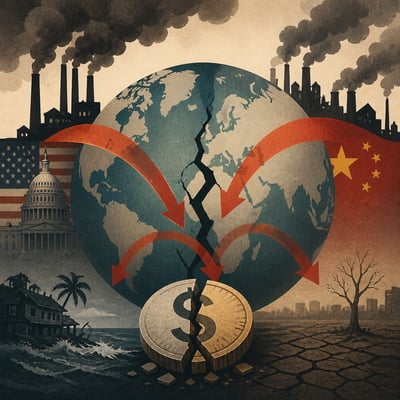
Recent coverage is dominated by a Stanford-led Nature study that assigns trillions of dollars in economic damage to historical greenhouse gas emissions, especially from the United States and China. The material repeatedly emphasizes cross-border harm, domestic losses, and the use of GDP-based methods to quantify loss and damage. The topic is coherent and fairly dense, with little fragmentation: most items point to the same research result and its implications for climate accountability, negotiation, and liability.

 Climate
 Privacy
 Bob Dylan
 Drones
 Data Centers
 AI Governance
 2026 Maine Senate Race