
 Climate
 Privacy
 Bob Dylan
 Drones
 Data Centers
 AI Governance
 2026 Maine Senate Race
Climate Change Weakens Crop Nutrition
Coverage from The Jerusalem Post, Futurism, and others
Articles
6
Active Days
122
The Topic
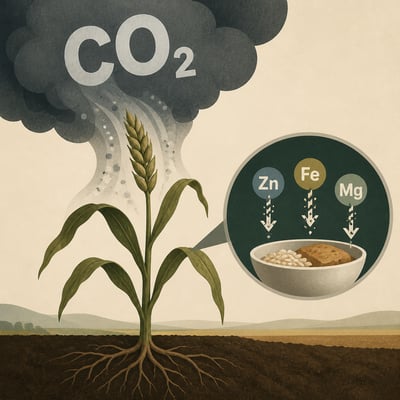
Research indicates that rising carbon dioxide, drought, heat, and other climate stresses can reduce the concentration of protein, iron, zinc, vitamins, and other minerals in crops and wild plants, even when overall growth or calorie production increases. Projections point to larger nutritional declines in some staple crops and in arid and tropical regions, potentially worsening hidden hunger, anemia, and other deficiencies among vulnerable populations. Researchers are examining gene editing and related breeding technologies as possible ways to improve nutrient density and climate resilience, although projected impacts and some health links remain uncertain.
First Article: 03/19/26
Latest Article: 07/18/26
Summary
- Higher atmospheric carbon dioxide is associated with lower concentrations of protein, iron, zinc, and other nutrients in several staple crops.
- Drought, heat, and elevated carbon dioxide can reduce micronutrient density even when plants grow faster or produce more calories.
- Projections suggest nutritional declines could be greatest in arid and tropical regions, with wheat and other staple crops facing particular risks.
- Reduced nutrient density could worsen anemia, zinc deficiency, pregnancy complications, and child-development risks where diets are already marginal.
- Researchers are proposing CRISPR-Cas, metabolic engineering, and related approaches to combine higher nutritional value with climate resilience.
- A separate analysis links rising carbon dioxide to changes in blood bicarbonate, calcium, and phosphorus, but it does not establish causation and requires further research.
History
The story now broadens from crop nutrition under climate stress to include wild plants and a more explicit regulatory/breeding angle for improving nutrient density and resilience. It also adds a separate human-health analysis on blood chemistry linked to rising CO2, while keeping causality unresolved.
The story broadens from CO2-driven nutrient loss alone to a wider climate-and-biofortification narrative, adding drought and heat as damaging factors and genetic solutions as an emerging response. It also introduces a preliminary US human health signal, though causality remains unproven.
Featured
Timeline: 122 Days
Hover over any logo to see coverage summary, click for full article.