
 Climate
 Privacy
 Bob Dylan
 Drones
 Data Centers
 AI Governance
 2026 Maine Senate Race
Democrats Reframe Climate As Affordability
Coverage from The New York Times, The Guardian, and others
Articles
11
Active Days
163
The Topic
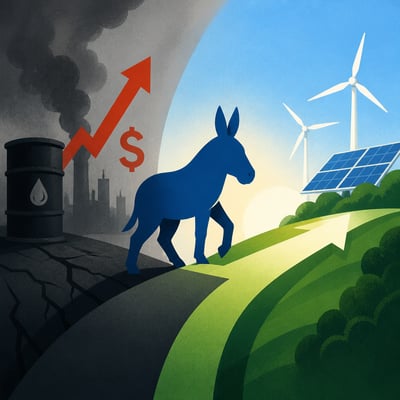
Recent coverage shows U.S. Democrats pulling climate language into affordability and cost-of-living framing, while extreme heat, energy-price shocks, and renewable deployment constraints keep climate impacts and clean-energy policy in view. The signal is politically coherent but split between messaging strategy and material climate-risk reporting.
First Article: 01/25/26
Latest Article: 07/06/26
Summary
- Democratic climate messaging has shifted toward affordability, with many figures emphasizing household energy bills, insurance costs, and cost-of-living politics rather than explicit climate language.
- A visible internal split persists between voices urging climate hushing and those arguing that climate change should remain a direct campaign issue.
- Extreme heat remains a recurring physical-risk storyline, tied to public health, grid stress, cooling demand, and broader adaptation pressure.
- Clean energy is repeatedly framed as a cost and resilience tool, especially when linked to oil-price volatility, geopolitical disruption, and energy independence.
- Renewable deployment still faces practical barriers, especially permitting uncertainty and policy friction that slow wind and solar growth.
- The cluster also tracks climate as an electoral and communications issue in Colorado and national Democratic primaries, where climate is often bundled with water, public lands, housing, and transit.
- Current signal is fairly dense and ongoing, but the material is split between strategic political commentary and operational climate-risk developments.
History
The story has broadened from a largely messaging-and-politics debate into one that more explicitly includes operational climate impacts and clean-energy deployment constraints. Climate framing is still the core issue, but extreme heat, energy-price volatility, and permitting friction now sit alongside the political messaging split.
The story has shifted from a general push to sell climate action as practical to a more explicit debate about climate messaging itself, with polling now used to argue that speaking plainly about climate is not electorally toxic. Sheldon Whitehouse has become a more central voice in that debate, and the coverage now leans harder on public opinion research and household-cost examples.
Featured
Timeline: 163 Days
Hover over any logo to see coverage summary, click for full article.